

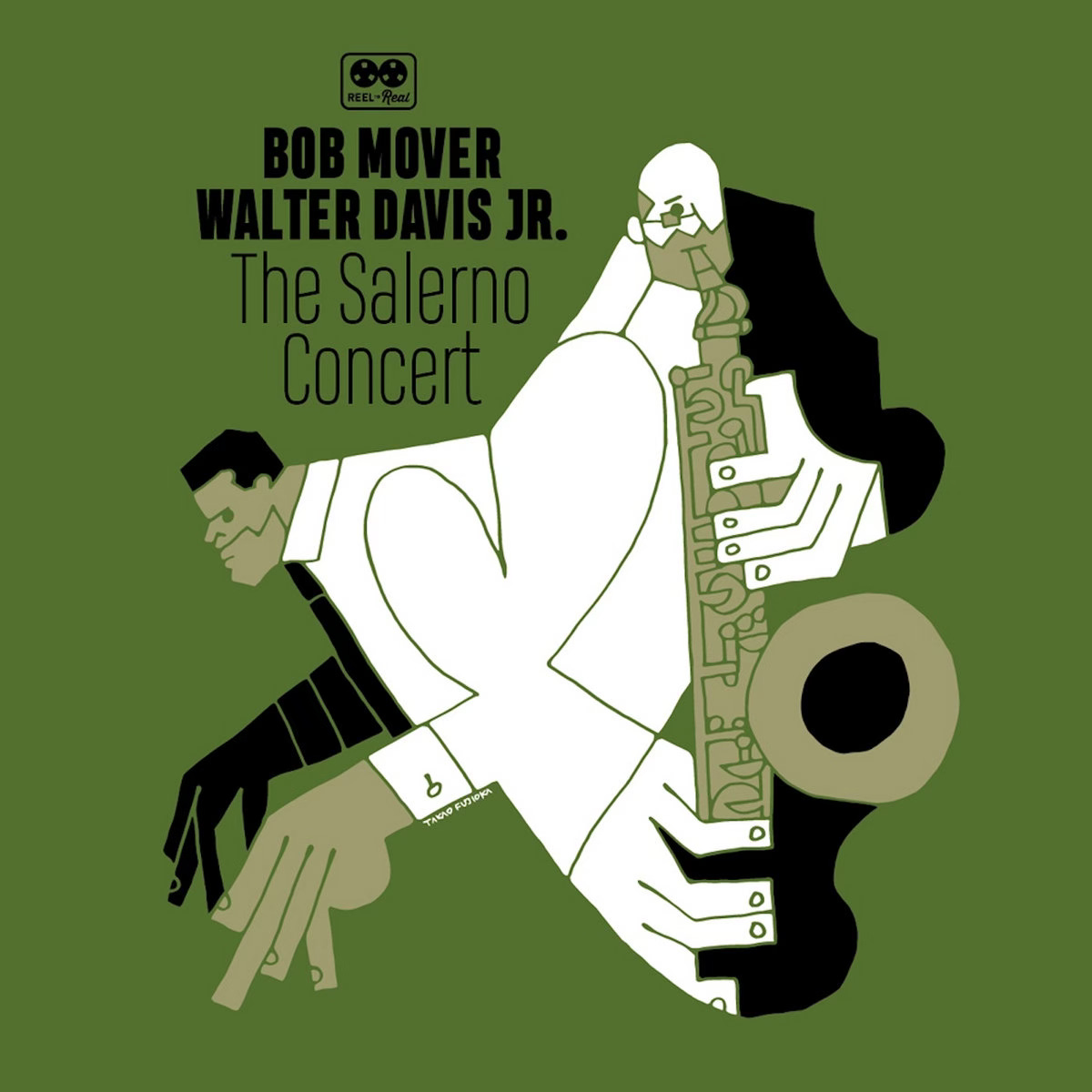
Monday, after posting about my dear friend Walter Davis, Jr., I received this email from saxophonist Bob Mover:
“I assume you don’t know that from 1987 until his death Humphries (not Humphrey, he was named for the character from the Dick Tracy cartoon) and I were a duo and made several tours in Europe as such. Cory Weeds’ Cellar Jazz label released a recording of one of our Italian gigs, ”The Salerno Concert.”
We also had a larger group that played the Montreal Jazz Fest and some other gigs with Richard Davis, Freddie Waits or sometimes a young Winard Harper, and Dizzy Reece.”
Somehow, I missed this recording in my research. My apologies. After hearing it, I agree it ranks among Walter’s finest recorded work. I’ve included it below.
But first, a few words about Bob Mover.

Bob Mover is a fascinating figure in jazz — beloved by insiders, largely unknown to the general public. Bob, born in 1952, is an alto, tenor, and soprano jazz saxophonist and vocalist, described as “a highly respected and extraordinary alto saxophonist, teacher, and theoretician.” Legendary pianist Hank Jones dubbed him “one of the greatest and most underexposed musicians in jazz,’
Born in Boston, Mover started playing saxophone at 13, and just two years later, Phil Woods heard him in a high school All Star band in Miami and gave him a scholarship to study with him that summer in Pennsylvania. While still a teenager, he was already sitting in with jazz luminaries like Roy Eldridge, Zoot Sims, and James Moody. By age 21, he had joined Charles Mingus for a five-month engagement in New York City, and then played with Chet Baker’s group for nine months before traveling to Brazil to work with samba legends.
His encyclopedic knowledge of tunes — both jazz and American Songbook standards — along with his deep understanding of harmony and his knowledge of the lyrics to every tune he plays infuses his performances with a depth rarely heard anymore. He is considered a musician’s musician rooted in the bebop tradition, with Charlie Parker as a central touchstone. Michael Brecker called him “a wonderful musician — one of the great alto players who in recent years has also become a real tenor player,” while Chet Baker said simply, “People are always amazed when they hear him play.”
Part of what makes Mr. Mover notable is the gap between his reputation among peers and his public profile. He has been described as “a wonderful musician who deserves more attention than he has received,” and his 1977 self-titled album on Vanguard — considered by some a masterpiece — was never reissued on CD. He has spent decades moving between New York, Montreal, Toronto, and Europe, teaching at universities like Berklee, York, and Concordia, which may have kept him in the shadows of the recording world.
In 2012 he toured internationally with Esperanza Spalding and the Radio Music Society, appearing at major festivals including the North Sea Jazz Festival and the Umbria Jazz Festival. He has continued releasing albums and, most recently, has been working on a book called the Bob Mover Jazz Lexicon: A Thesaurus of Musical Ideas, described as a theoretical guide to jazz improvisation.
In short, he’s one of jazz’s great hidden gems — a player with towering credentials who somehow never broke through to wider fame, which only adds to his mystique among serious jazz listeners.
Listen to The Salerno Concert featuring Walter Davis, Jr. on piano, and Bob Mover on alto saxophone.
“A Nightingale Sang in Berkeley Square”
“All God’s Children Got Rhythm/Little Willie Leaps”
“All The Things You Are”
“Bird Feathers”
“Donna Lee”
“Nica’s Tempo”
“Salt Peanuts”
“Star Eyes”
“You Don’t Know What Love Is”
Thank you so much , Brett! I am deeply grateful!♥️🎶🎶
I love that you give credit where credit is due and introduce us to more gret talent. Always loved Salt Peanuts.