


After the '70s, America went through an identity crisis. That restless, adventurous spirit that had us crisscrossing the country, praying fervently under church steeples, and knocking down pins in smoky bowling alleys? It started fading away.
It’s like the whole nation collectively decided to take a breather, only to find itself stuck in the mud of inertia. Clubs and associations, once buzzing with life, began to wilt. Books clubs, bowling leagues, all those community activities that kept us tight-knit? They started to unravel.
Fast forward to the first decades of the 21st century and in-person social interactions for American men nosedived by 30%. Unmarried guys? They retreated into isolation by 35%. Teenagers? Their face-to-face hangouts plummeted by over 45%, losing more than three hours of weekly social time. What filled the gap? Screen time. Endless, soul-sucking screen time.
Nielsen's Total Audience Report from 2022 found that the average American adult spends about 11 hours per day consuming media, which includes screen time for TV, computers, smartphones, and other devices.
Now, some might say, "being alone isn’t that bad, especially with our digital connections." But surveys show rising anxiety and discontent, especially among the youth. By 2023, pollsters were scratching their heads at the relentless gloom hanging over America.
The shift to digital engagement is obvious. The more time people, especially high school students, spend on screens, the less they interact in real life. Studies even show that quitting social media leads to more face-to-face socializing. But most people can’t put their screens down.
Another reason for dwindling social interactions? We’re just too damn busy. Folks in their 30s and 40s have less leisure time than two decades ago. And moving away from social circles due to housing market madness only adds to the isolation.
In the crumbling empire of American togetherness, community spaces are losing their social vibe. Churches, community centers, even offices are becoming ghost towns. We’re trading communal rituals for solo screen time, diving headfirst into a "ritual recession."
The fallout is brutal, especially for the youth of this country. Loneliness, depression, and suicidal thoughts are skyrocketing. The CDC reports that persistent sadness among teenage girls soared from 36% to 57% in a decade. Are we fucked up or what?
We’re living in a bizarre era, straddling a pre-internet past and today’s hyper-connected chaos. Kids used to fend off boredom with creativity. Now, they’re swamped with distractions, raising questions about the future adults they’ll become.
Today’s crisis is about presence. With constant digital connectivity, true solitude is rare. This marks a massive shift in the human condition, with implications we can’t yet fully grasp.
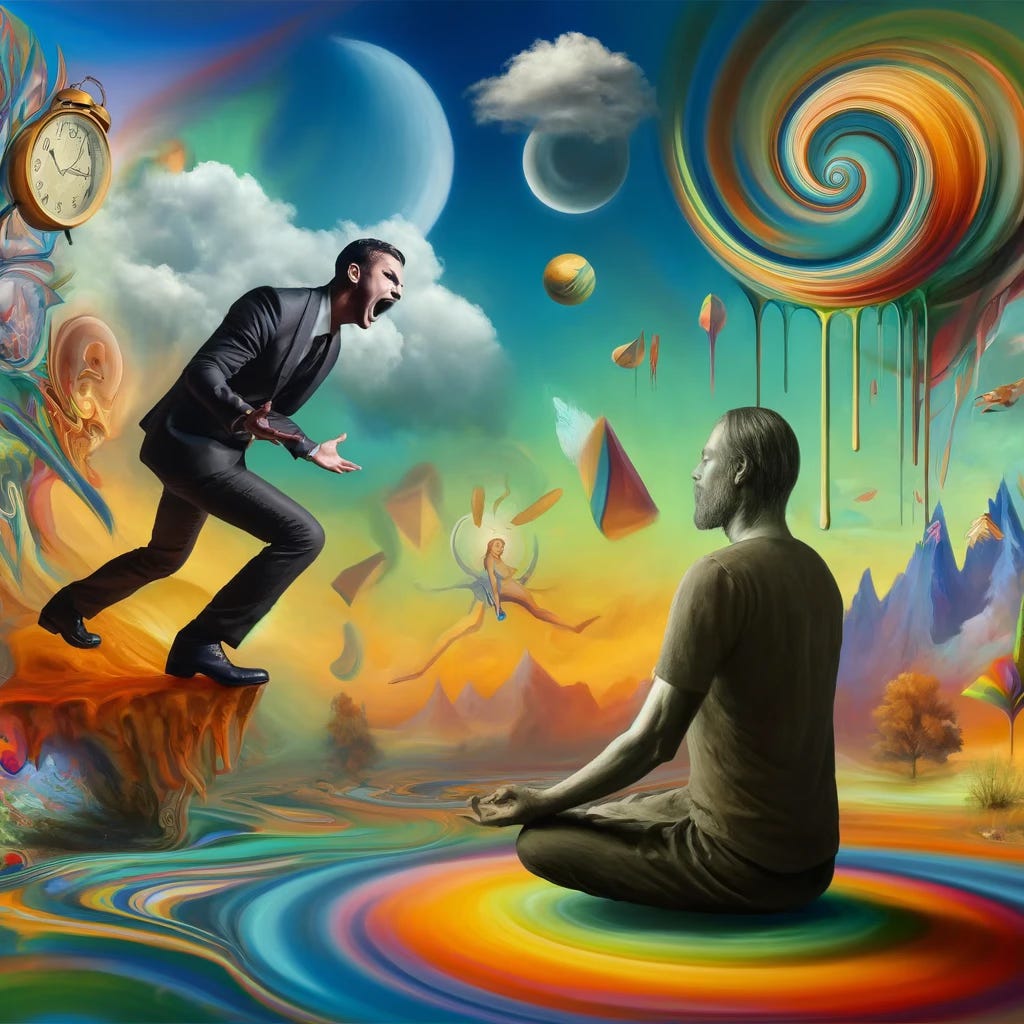
We’re in a cosmic tug-of-war between digital distraction and human connection. Sartre once said hell is other people. Maybe he was onto something. But right now, staring into the abyss of isolation, we might find a much grimmer alternative. So, let’s put down our phones, talk to each other, and maybe, just maybe, rediscover what it means to be human? Is that even possible now, or is it just too late?
A couple of weeks ago, my wife and daughter went out to lunch together. Later, my wife said that they texted each other during lunch and she thought it was "fun." I'd rather stay home and read, or stare out the window than spend time texting someone I'm sitting with.
You speak the truth, Bret. Human (and other living beings too) interaction has been devalued and ignored. Yesterday I had two good talks. One at the barbershop another while out for a walk. For the over 4 years I have had anosmia which is isolating. So I treasure these talks when ever I get a chance to have one.