
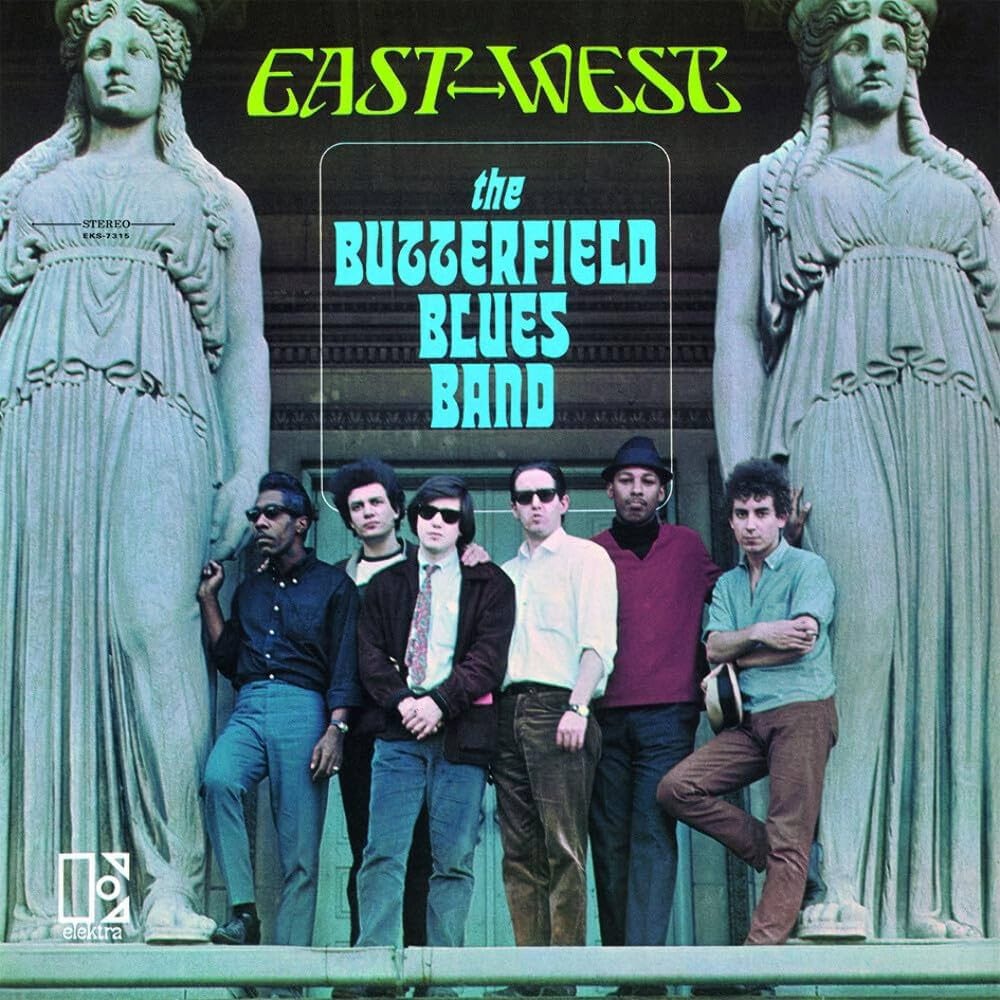
The Paul Butterfield Blues Band didn’t just play music—they detonated it. Born in the gritty clubs of Chicago, this band wasn’t some polished, manufactured blues act. They were a raw, roaring, integrated hurricane that tore through the segregated music scene of the 1960s. Fronted by harmonica wizard Paul Butterfield, the band was a walking paradox: a white Chicago kid with a black man’s soul leading a troupe that smashed boundaries as effortlessly as they bent notes.

The Roots: Chicago’s Electric Jungle
Paul Butterfield wasn’t just from Chicago; he was Chicago. Born on the South Side, Butterfield grew up in a city alive with the electric blues. This wasn’t sanitized, coffeehouse blues—this was Muddy Waters, Howlin’ Wolf, and Little Walter, blasting out of sweaty West Side clubs. Butterfield soaked it all in, cutting his teeth in those same clubs as a young white kid who had no business being there, yet somehow fit perfectly.
Mike Bloomfield came from a wealthy Chicago family but rejected it all for the guitar. He haunted the clubs, playing alongside legends like Muddy Waters and Big Joe Williams, who taught him the kind of blues you don’t learn from records. Bloomfield wasn’t just a great player—he was an innovator, dragging the blues into uncharted waters. When Bob Dylan went electric at Newport in 1965, it was Bloomfield’s guitar screaming in the revolution.
Bloomfield first sat in with Muddy Waters during live sets at Chicago clubs like Pepper’s Hideout before he was even old enough to be officially allowed inside such a venue, cutting his teeth on the South Side of Chicago with the old master, learning and earning his chops.

An Integrated Revolution
At a time when integration was still a battlefield, the Paul Butterfield Blues Band stood as a living, breathing testament to what music could do. Bassist Jerome Arnold and drummer Sam Lay were veterans of Howlin’ Wolf’s band—black musicians who brought an authentic, driving groove. Butterfield, Bloomfield, Elvin Bishop on guitar, and Mark Naftalin on keyboards filled out the roster. Together, they didn’t just play music—they smashed the color lines in the blues scene, wielding their instruments like battering rams against prejudice.
The Experiment
By 1966, Butterfield and his band weren’t content with just tearing up the Chicago blues rulebook. They wanted to rewrite it entirely. Enter East-West, their second studio album and an avant-garde masterpiece. The title track, a 13-minute instrumental, wasn’t just a song—it was a psychedelic journey, a meditation, and a declaration of war on the confines of traditional blues.

Bloomfield, ever the explorer, took inspiration from Indian classical music and John Coltrane’s modal jazz. He was obsessed with the way ragas and modal scales could stretch time, allowing a soloist to explore endlessly. On “East-West,” Bloomfield and Elvin Bishop traded solos that soared, spiraled, and crashed like waves. Butterfield’s harmonica, typically the anchor in blues, stepped aside, letting the guitars take the spotlight.
It was an audacious gamble, and it paid off. The track was a blueprint for the psychedelic rock and jam band movements that would follow, influencing everyone from The Grateful Dead to the Allman Brothers. This wasn’t just blues anymore—it was something entirely new.

Bloomfield didn’t stop at East-West. Shortly after, he left to form the Electric Flag, another genre-defying band that fused blues, rock, and soul with horns and funk grooves. But his fingerprints were everywhere. Dylan’s Highway 61 Revisited? That’s Bloomfield. The rise of blues rock as a genre? That’s Bloomfield too. His playing was fiery, fearless, and always a little dangerous, like the man himself.
The Paul Butterfield Blues Band’s legacy isn’t just in the music—it’s in the barriers they broke, the risks they took, and the souls they stirred. East-West remains a cornerstone of rock history, a daring blend of East and West, black and white, tradition and revolution.
Butterfield, Bloomfield, and their bandmates didn’t just play the blues—they redefined it, expanded it, and, in the process, reshaped American music forever.
Listen to East West
On Monday, meet Guatemala’s cigar stompin’, liquor drinkin’ Saint, Maximon.
And please remember, let your conscience be your guide.
Thank you for this fabulous article on one of my most favorite blues bands ever!!! I wore out both their first and second albums. I believe I still have those lps. While I know many great harp players past and present abound, my two favorites continue to be Butterfield and Little Walter. I had to come back to say that both Butterfield and Little Walter were awesome vocalists as well! Especially Butterfield of course!!
thanks for this appreciation, Bret. gotta give it up to Nick Gravenities, too, for writing “Born in Chicago” — and besides Pigboy Cranshaw, Butterfield was also an innovator of In My Own Dreams.