
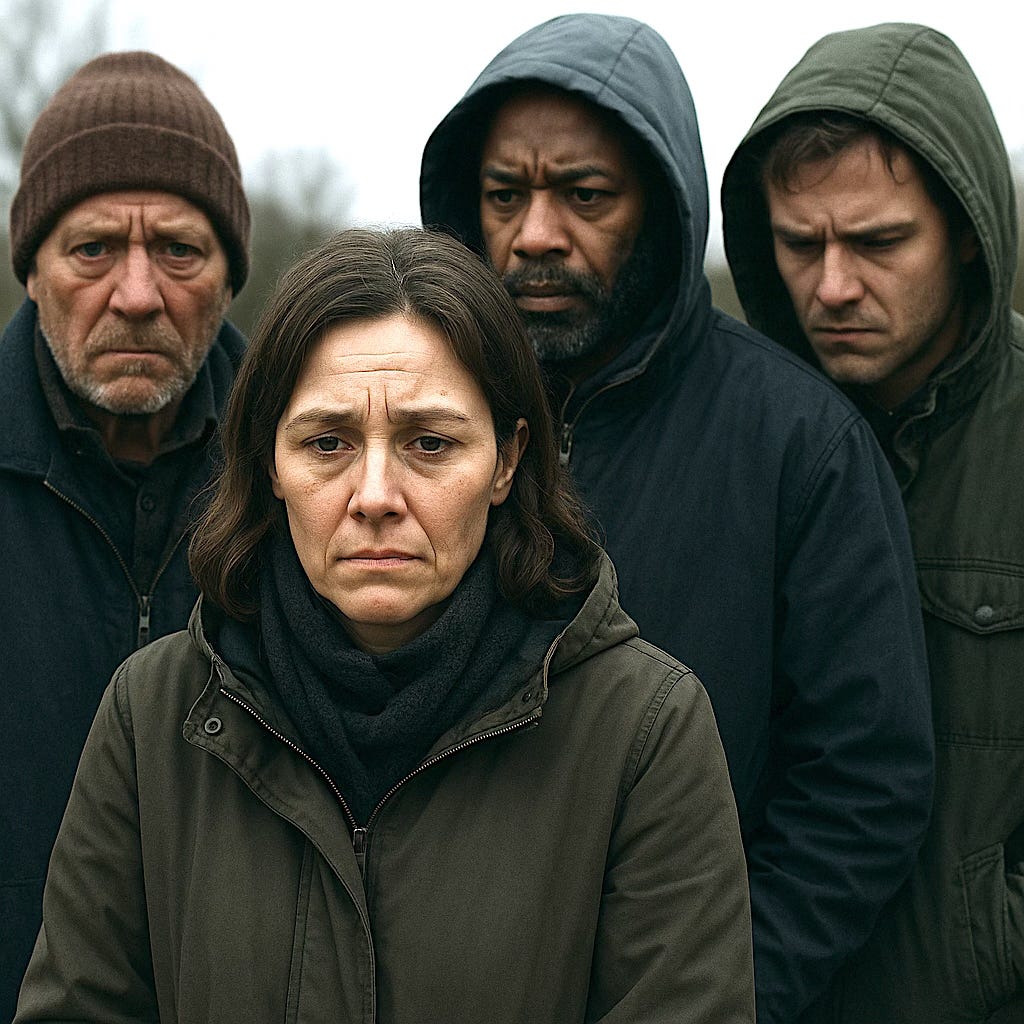
Last week, President Donald Trump toured the Alligator Alcatraz migrant detention center—an eerie, barbed-wire fortress deep in the Florida Everglades, 37 miles outside Miami. Surrounded by crocodiles, pythons, and political theater, Trump smiled for cameras while Congress pushed forward a spending bill that would accelerate deportations.
But this story isn’t just about policy. It’s about cruelty—and the strange pleasure that some seem to take in it.
A growing number of Americans are asking the same uncomfortable question:
What makes MAGA so cruel?
We understand ambition. We understand political domination. But cruelty—targeted, theatrical, almost gleeful cruelty—requires another explanation. From family separations to jeers at disabled reporters, from mocking protestors to stripping away rights, the MAGA movement has repeatedly crossed the line between political hardball and sadism.
So what’s going on?
The Authoritarian Trigger: Fear
Let’s start with the psychology.
Trump attracts—and embodies—what psychologists call the authoritarian personality. These individuals crave order, hierarchy, and strong leadership. They aren’t always this way, though. Authoritarianism isn’t a constant trait. It’s activated by fear.
Fear flips a switch.
When people feel threatened—by chaos, by cultural shifts, by “the other”—they fall back on rigid social structures and strongmen to protect them. Trump knows this. He weaponizes fear with surgical precision.
From his infamous “Mexicans are rapists” campaign kickoff to his “American carnage” inaugural address, Trump paints a world spiraling out of control. It’s not just rhetoric. It’s psychological warfare designed to trigger panic—and activate obedience.
What MAGA Fears Most
It’s not crime. It’s not poverty. It’s status loss.
Study after study shows that many MAGA supporters aren’t the poorest or most economically disadvantaged. They’re not living in the rubble of globalization. What unites them is status anxiety, especially among white men.
As women, immigrants, LGBTQ+ people, and minorities gain visibility and power, many in the traditional power structure feel dethroned. Their automatic social dominance is no longer guaranteed.
The fear isn’t that others are rising—it’s that they are falling in comparison.
Revenge, Not Reform
That status anxiety breeds resentment, and resentment craves revenge. MAGA doesn’t cheer for new policies. It cheers for others being pushed down.
It’s not about building a better life. It’s about making sure someone else doesn’t get ahead.
Deporting migrants. Mocking feminists. Stripping rights from trans people. These aren’t policies—they’re punishments. They’re about restoring the old pecking order, with Trump as the enforcer and avatar of their fury.
The Bile of Steven Miller
Nobody exemplifies this better than Trump’s long-time advisor Steven Miller. Not known for brilliance, he is known for bile—a visceral loathing of immigrants and minorities. Former Republican operatives confirm it: he built his power not on ideas, but on resentment.
That makes him the perfect emissary for the MAGA base. Not just angry. Enraged.
The Trump Connection: One of Us
When Trump is indicted, convicted, or attacked, his support doesn’t shrink—it grows.
Why?
Because his supporters feel merged with him. His persecution becomes theirs. He’s not a billionaire TV star anymore—he’s a martyr, bleeding in the trenches of cultural war. He embodies their pain and their fantasy of retribution.
Not Just White Men
While white men are the core of MAGA, the psychology of status threat crosses racial and gender lines.
In 2024, Trump gained support among Latino and Black men, many of whom hold dominant roles within their communities and feel that rising female or queer empowerment threatens that role. Many white women feel similarly. A majority voted for Trump in 2016, and a significant number again in 2024.
So while MAGA is often racially coded, it’s really about social hierarchy—and who feels like they’re sliding down the ladder.
This is why MAGA is such an existential threat. It’s not just about Trump. It’s about a deep, widespread readiness to abandon democracy in favor of restored dominance.
If staying on top requires dismantling democratic norms, then so be it. Many in the movement don’t just tolerate that—they welcome it.
And when Trump is gone, the psychology will remain.
Others will rise from that same pool of resentment.
This isn’t a call to coddle authoritarians. But if we’re going to defend democracy, we need to understand what we’re up against.
These are not just villains in a comic book. These are people steeped in fear, resentment, and loss. If we write them off as lunatics or narcissists, we miss the opportunity to disarm the fear that powers their rage.
How to Disarm Their Fear
Disarming their fear requires strategy, empathy, and a scalpel—not a sledgehammer. Here are five approaches, each tailored to a different mindset or situation:
1. Tell a Bigger Story Than the One They Fear
Fear thrives in isolation and narrow frames. Show them a wider, richer story—where immigrants aren’t threats but neighbors, where change isn’t loss but possibility. Use narrative, not argument.
Example: “I used to think that too. Then I met Rosa, my neighbor—she fled violence, now she’s raising two kids and teaching math.”
2. Find the Fear Beneath the Rage
MAGA fear often wears the mask of anger. Underneath is fear of being irrelevant, forgotten, outnumbered. Speak to that directly, with compassion.
Example: “You’re not losing your country. You’re part of a country that’s trying to find its soul again—and you’re invited.”
3. Use Humor to Deflate the Monster
Cruelty and fear grow big when we treat them like sacred beasts. A well-placed joke can pop the balloon.
Example: “You really think the deep state wants to microchip you? Man, they can’t even fix potholes.”
4. Invite, Don’t Instruct
Telling someone they’re wrong triggers the fight-or-flight. But inviting them into your experience can shift their stance without confrontation.
Example: “I used to be scared too—until I actually sat in a mosque and listened. It didn’t make me less American. It made me more human.”
5. Let the Cruelty Speak for Itself—Then Ask Why
Don’t debate policies—spotlight actions. Show the cages, the chants, the chaos. Then ask, gently:
“Do you think that’s who we are?”
Let the silence work.
A Community for Understanding
If this resonates with you, join the conversation.
🗣️ Comment below. Share your thoughts. Support others.
Let’s build something better. Let’s face this moment with courage and clarity—together.
_ _ _ _ _ _ _
Until we meet again, let your conscience be your guide.
,,,then they came for me...
Evil
June 27, 2025
Evil
is the movement of pain
from one place to another.
Evil needs a source, a river of fire
rising from Hell. Evil
dwells in the Land of Intentions,
where power is never shared.
Who makes the pain?
How does suffering dive off the board
of one person’s mind
and land
in a pool of fear in someone else’s?
Should I be surprised to find evil
right here, inside myself? Hardly. I know what evil I carry.
I know it well. I won’t surrender any more
to the cruel aspect of my mind. I can think in polarities,
evil is “this”, good is “that”. I get exhausted with polarities.
Can Evil simply Be? There is no countervailing impulse, no good deed to excuse the causing of pain.
The goal of evil is undeserved suffering. That suffering
is everywhere. The ones who cause it
are also everywhere.