

The Pentagon has announced plans to livestream the execution of Nidal Hasan, convicted of the 2009 Fort Hood killings. An execution would become a broadcast available to a public audience.
My first thought was about Network.
Fifty years ago, Paddy Chayefsky imagined television executives arranging a man’s death as programming. Now the government proposes putting an execution on a screen. The circumstances are different. The decision to make a death into a public spectacle is what brought the film back to me.
In 2001, an internet company sought permission to webcast Timothy McVeigh’s execution. The government refused, and a federal judge upheld that refusal. The company’s claim that the public had a right to watch did not establish a right to bring a camera into the execution facility. There was a boundary between carrying out a sentence and broadcasting it.
The proposed livestream asks us to move that boundary. Network helps explain why we should pay attention to the people moving it.
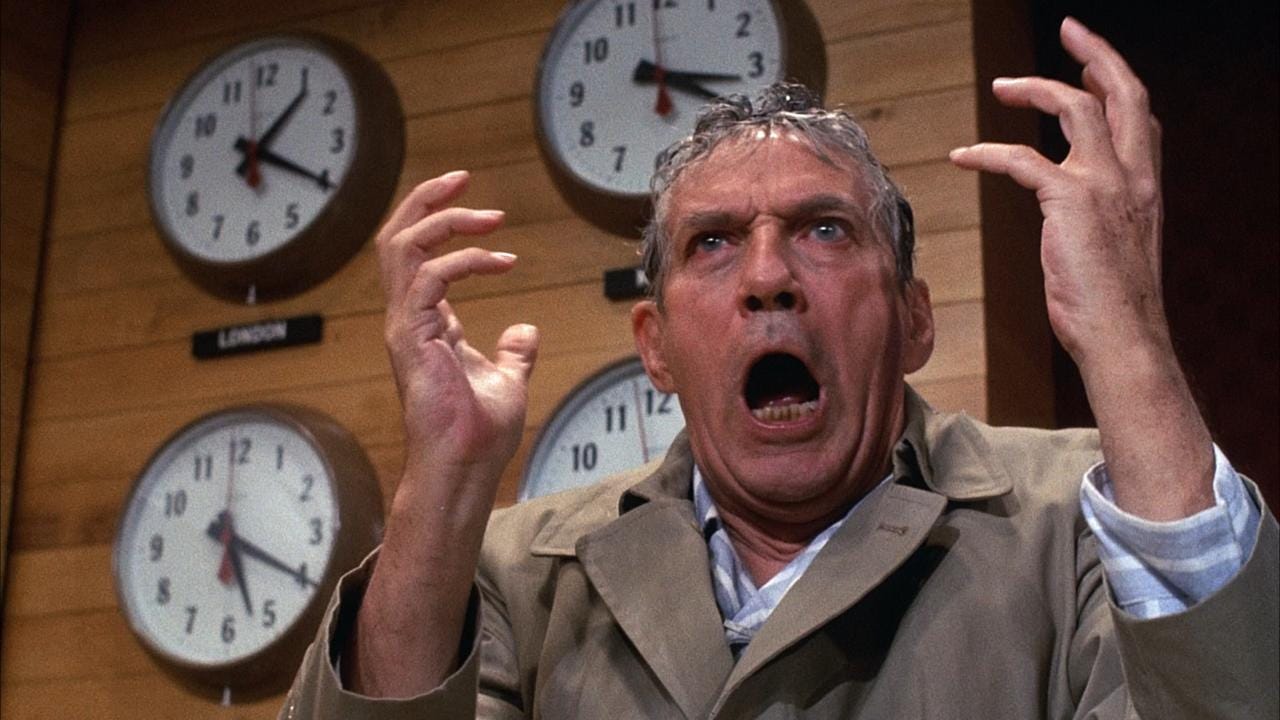
In the film, Howard Beale, a veteran news anchor, learns he is being fired for low ratings. He announces on the air that he will kill himself during a future broadcast. His breakdown attracts viewers. The network discovers a new use for him.
Beale becomes the mad prophet of the airwaves. He tells people to get up, go to their windows, and shout their anger into the night. They obey. A man coming apart has become a successful format.
Meanwhile, programming executive Diana Christensen develops a series around a radical group that films its own bank robberies. The footage has commercial potential. There are contracts to negotiate and a schedule to fill.
Chayefsky understood the machinery that could make these developments plausible. He came out of live television drama in the 1950s; Marty was a television play before it became a film. Director Sidney Lumet worked in that world too. They knew what television could accomplish when it paid attention to ordinary human beings.
In Network, that attention has become something to extract from them.
Beale denounces television through television, and the network sells advertising around his denunciation. His audience gets the feeling of resistance. The corporation gets a hit show. The arrangement works for everyone except the man whose distress makes it possible.
That is the film’s enduring insight. An institution can absorb anger directed against it and find a way to sell it.
Cable news, reality television, and social media have given that insight new settings. Anger brings people back. Humiliation travels. A person’s worst moment can become someone else’s most successful material. The available tools change; the incentive to hold an audience remains.
The proposed execution broadcast raises a related question about political power. A government can use a screen to demonstrate what it is willing to do. Viewers are invited to witness punishment, and the act of witnessing becomes part of the message.
Beale’s assassination and Hasan’s execution are different acts with different purposes. In Network, the murder solves a programming problem. A government execution carries out a sentence. Broadcasting that execution is an additional decision, one that requires its own justification.
Who is the audience? What are they being asked to experience? What does the broadcast accomplish that the sentence itself does not?
Network becomes more unsettling when it moves beyond the newsroom.
After Beale threatens a corporate deal, chairman Arthur Jensen summons him to a darkened boardroom. Ned Beatty turns the meeting into a sermon. Jensen describes a world governed by corporations, currencies, and markets. Beale has interfered with that order, and now he must preach it.
Beale leaves converted. His audience does not follow him. The ratings fall.
Here the film complicates its own argument. Jensen wants his doctrine broadcast even when it fails commercially. The executives below him still need a successful show. Beale is trapped between the owner’s convictions and the programmers’ numbers.
Their solution is to have him killed on the air.
The horror emerges through meetings and professional decisions. People protect their authority, preserve a deal, and address a failing program. They can explain what they are doing in the language of their jobs.
Chayefsky also shows what those habits do to private life.
Diana cannot stop producing. Even her affair with Max Schumacher, the aging news executive played by William Holden, competes with her preoccupation with programming and ratings. She can describe what an audience wants more easily than she can respond to the person beside her.
Their relationship gives the film’s institutional argument a human cost. The abilities that advance her career leave her poorly equipped for intimacy. Another person’s suffering becomes a problem to manage. Joy barely holds her attention.
Yet Network implicates its own audience too. Beale’s speeches are thrilling. We feel their rhythm and force. We understand why people would open their windows and shout.
Chayefsky gives us the pleasure of the spectacle before asking us to examine it. That makes the film more searching than a lecture about other people’s bad judgment. We have felt the attraction ourselves.
The announced livestream deserves that kind of examination before it happens. Supporting a death sentence does not settle whether the death should be broadcast. The camera introduces another purpose, another audience, and another exercise of power.
Chayefsky’s frightening insight was how easily an extraordinary decision could become routine.
Someone approves the feed. Someone schedules the coverage. Someone prepares the introduction.
Before anyone watches a man die, people at desks have made it part of their working day.
THANKS FOR THIS, BRET.
Mad as hell and not taking it for 50 years….