

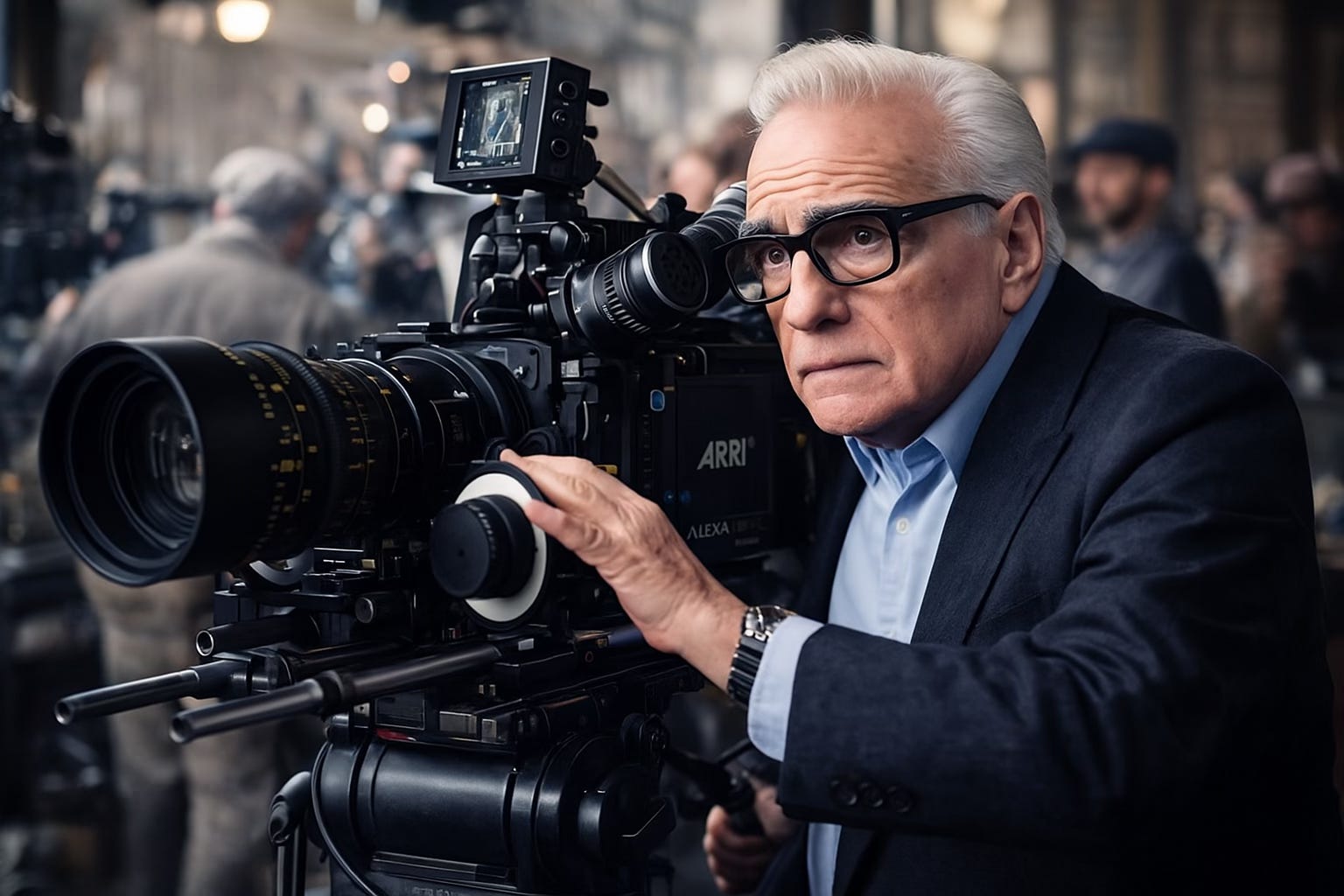
Between 1968 and 1971, I studied at NYU Film School during one of cinema’s most transformative periods. The Hollywood studio system was collapsing, and a new generation of auteurs was emerging. Film education barely existed then. NYU, USC, and UCLA were the only serious options for aspiring filmmakers. We knew we were witnessing something revolutionary.
Martin Scorsese taught several of my classes. We called him Marty, and though he was only in his mid-twenties, his reputation already preceded him. The Big Shave and Who’s That Knocking at My Door had made him the filmmaker everyone was watching. His talent was obvious, but what struck me most was his dedication as a teacher.
Calling him knowledgeable feels inadequate. He had absorbed seemingly every film ever made and could recall scenes, shots, and techniques from memory. His classes had no real endpoint. Scheduled for three hours, they would stretch to five or six as he answered every question with the same intensity he brought to the first one. He wanted us to understand not just how films worked but why they mattered.
His teaching went beyond theory. When a student project failed, Marty would diagnose the problem with surgical precision, then help arrange equipment for reshoots. Resources were scarce at NYU then. We had minimal gear and less money. But Marty would negotiate, trade favors, and somehow secure what we needed to try again. He treated our student films with the seriousness of professional productions.
I took three classes with him over those years. Each one deepened my commitment to filmmaking. He taught technique, certainly, but more importantly, he transmitted passion. Film wasn’t just a career path in his classroom. It was a calling that demanded everything you had.
The timing felt charged with possibility. While we studied at NYU, Woodstock happened. Marty worked on the documentary as assistant director and editor. He would disappear to work on the film, then return with stories from the cutting room. We were learning filmmaking while history was being filmed around us.
I wouldn’t claim to have known Marty well personally. Our relationship was student to teacher, though he made every student feel their work mattered. What I knew with certainty was that those classes had changed my trajectory. Before studying with him, I loved movies. After, I understood filmmaking as something worth dedicating a life to.
Looking back now, after decades in the industry myself, I recognize how rare that teaching gift was. Marty could have been dismissive, protected his time, treated teaching as obligation rather than opportunity. Instead, he gave us everything he had. He shared not just knowledge but conviction. He showed us that filmmaking could be art, that personal vision mattered, that the collapsing studio system meant opportunity rather than crisis.
Those three years at NYU feel compressed in memory into a series of revelations. Each class with Marty added another piece to my understanding. The path forward became clearer with every discussion, every screening, every extended conversation about why a particular shot worked or failed. By graduation, I knew exactly what I wanted to do with my life. That certainty came directly from his classroom.
The world was changing, cinema was being reinvented, and we had a front-row seat to the revolution. More than that, we had a guide who understood both where film had been and where it was going. That remains the greatest education I ever received.
Martin Scorsese has been documented, analyzed, and interviewed countless times over five decades. Now Rebecca Miller’s five-part series for Apple TV Plus claims to offer something different, and critics are responding with unusual enthusiasm, calling it “exhilarating, urgent, invaluable” and describing it as essential viewing.
The series distinguishes itself through focus and approach. Rather than presenting Scorsese as the walking film encyclopedia he’s often portrayed as, Miller centers the human being behind the camera. For years, Scorsese has expressed frustration at being treated primarily as a cultural historian or archive of cinema knowledge. This documentary responds to that frustration by examining the personal experiences that shaped his artistic vision.
The core thesis runs through every episode: the art cannot be separated from the life. Each creative decision traces back to lived experience. Former wife Isabella Rossellini’s characterization of Scorsese as “saint/sinner” captures the fundamental tension that defines both his personality and his work. Here is someone who nearly entered the priesthood yet threw himself into the chaos of 1970s Hollywood. Someone known for explosive anger who treats cinema as sacred ground. The documentary argues this duality isn’t incidental to his genius but fundamental to it.
The series traces this tension back to childhood. Scorsese describes his family’s forced move from Queens to a Little Italy tenement as being “cast out of paradise.” Severe asthma confined him indoors, turning him into an observer watching street life from windows above. The only place he could breathe freely was the movie theater. Miller draws direct connections between this elevated childhood perspective and Scorsese’s signature high-angle shots, suggesting his visual language emerged from physical necessity.
This outsider status became permanent. He was the sick kid watching from above, later the Catholic filmmaker excommunicated after The Last Temptation of Christ, often the New York auteur at odds with Hollywood sensibilities. The documentary positions this perpetual outsider status not as obstacle but as creative fuel.
The series doesn’t shy away from the chaos. By the late 1970s, Scorsese appeared to be Hollywood’s chosen one, yet his personal life was disintegrating. Cocaine use escalated until he landed in the hospital, barely alive. “I was dying,” he states plainly. Robert De Niro’s hospital visit and push to make Raging Bull becomes a pivotal moment, transforming potential tragedy into artistic breakthrough.
Yet the pattern continued. The King of Comedy failed commercially. The Last Temptation of Christ triggered global controversy and death threats. By the late 1990s, his career seemed stalled until Leonardo DiCaprio helped catalyze another revival with Gangs of New York. The documentary reveals an artist who has experienced not one comeback but continuous cycles of crisis and renewal.
Miller structures the narrative chronologically but with careful emphasis. The early years and the turbulent 1970s-80s period receive the most attention and depth. This makes sense given their formative importance, but it means the past twenty-five years feel compressed. Major works pass by quickly. Hugo gets minimal coverage. His decades of film preservation work, which has saved hundreds of films from destruction, receives only passing mention.
The documentary’s treatment of Scorsese’s relationships proves particularly revealing. His marriages, friendships, and creative partnerships all reflect the same patterns of intensity, devotion, and frequent combustion. The series suggests these relationships weren’t separate from his artistic process but integral to it. His collaborations with De Niro, later with DiCaprio, emerge as more than professional partnerships. They become forms of creative communion.
What emerges most powerfully is the religious dimension of Scorsese’s vision. Not religious in the conventional sense, though his Catholic background permeates everything, but religious in treating cinema itself as sacred practice. The documentary shows how each film becomes an act of confession, penance, or revelation. Even his most violent films contain this spiritual searching.
The technical aspects deserve mention. Miller assembles rare footage and photographs, including home movies and behind-the-scenes material rarely seen before. The editing mirrors Scorsese’s own kinetic style without becoming derivative. Interview segments feel conversational rather than formal, catching Scorsese in reflective rather than performative mode.
Critical response has been overwhelmingly positive, though not without reservations. The rushed treatment of recent decades frustrates some reviewers. Others wanted more on his work as curator and preservationist. The documentary’s focus on American films means his passion for world cinema gets limited attention. These aren’t failures so much as choices about scope and emphasis.
Perhaps the most significant achievement is how the series reframes familiar material. Stories that Scorsese fans know well gain new resonance when placed in this broader psychological and spiritual context. The famous Taxi Driver production becomes not just about making a controversial film but about working through personal demons. The Last Temptation controversy transforms from career crisis to spiritual reckoning.
The documentary also benefits from timing. At 82, Scorsese remains creatively vital, with Killers of the Flower Moon recently released and more projects planned. This isn’t a retrospective on a completed career but a portrait of an artist still evolving. The series captures someone looking back while simultaneously pushing forward.
Miller’s approach respects both the filmmaker and the audience. She doesn’t simplify Scorsese’s contradictions or smooth his rough edges. The volatile temper, the obsessive behavior, the periods of self-destruction all remain visible. Yet she also shows how these elements connect to the work’s power. The films emerge not despite the turmoil but through it.
For film students and scholars, the documentary offers valuable insights into creative process. Scorsese discusses specific technical choices, explaining how personal experience translated into visual language. His description of developing his editing style while watching films as an asthmatic child reframes technique as autobiography.
The series also functions as cultural history. Through Scorsese’s story, we see the transformation of American cinema from the studio system’s collapse through New Hollywood’s rise and fall to the current streaming era. His career spans and embodies these changes.
Some of the most compelling moments come when Scorsese discusses failure. The commercial disappointments, the critical dismissals, the projects that never materialized. He speaks about these experiences without bitterness, viewing them as necessary parts of the creative journey. This perspective feels particularly valuable in an era obsessed with success metrics.
The documentary raises questions it doesn’t fully answer. How does an artist maintain such intensity across six decades? What drives someone to keep creating after achieving every possible recognition? Miller lets these questions hover rather than forcing conclusions.
Ultimately, the series succeeds because it treats Scorsese as neither icon nor institution but as a working artist still grappling with fundamental questions. The same obsessions that drove Mean Streets still animate his latest work. The documentary captures this continuity while acknowledging evolution.
Is this the definitive Scorsese portrait? Probably not, if only because the subject continues creating and changing. But it may be the most intimate and psychologically penetrating examination yet attempted. It reveals the person behind the persona without diminishing either.
For those who know Scorsese’s work deeply, the documentary offers fresh perspectives on familiar material. For newcomers, it provides essential context for understanding one of cinema’s most important voices. Both audiences will find value here.
The series reminds us that great art emerges from lived experience, that technical mastery serves emotional truth, and that creative vitality can persist across decades if the underlying questions remain urgent. Scorsese’s questions about guilt, redemption, violence, and grace haven’t been answered. They’ve only deepened.
This documentary doesn’t close the book on Martin Scorsese. Instead, it opens new chapters in understanding an artist who treats every film as both confession and quest. In showing us the person behind the films, Miller helps us see the films themselves more clearly. That achievement alone makes this essential viewing.
This is the film I made for Marty’s NYU Senior Production Class in 1971, Rough Ride, about one night in the life of a New York City taxi driver. While at a student at NYU, I supported myself by driving a taxi at night.
Hey! Is it too late to get my name above the title?
Excellent and clear reflection on Miller’s compelling portrait of Marty.
Wow bravo Bret! Loved "Rough Ride!"!! Great soundtrack (of course), and awesome cinematography and direction, and I loved that you didn't show the driver's face--unless he was one of the guys in the beginning? I guess the obvious question is do you think Marty was influenced by your film when he was making "Taxi Driver"? I'm one of many huge fans of his works. "King of Comedy" is one of my favorites, though there are quite a few. Didn't know it was a commercial failure. I thought it was a masterpiece.
I was a cab driver in my early 30s for a few years in the mid-80s. A white girl in an all-Black company based in Palmer Park, MD, I started out as a driver with no sense of direction and became the hacker from hell on wheels. Of course as a female I only drove during the day. Sundays were a huge score as all the other drivers were watching football and I doubled and tripled pickups going to the airports. I definitely have stories.
Thanks for sharing. I look forward to watching the Apple TV documentary. And thanks for the "drive" down memory lane!