

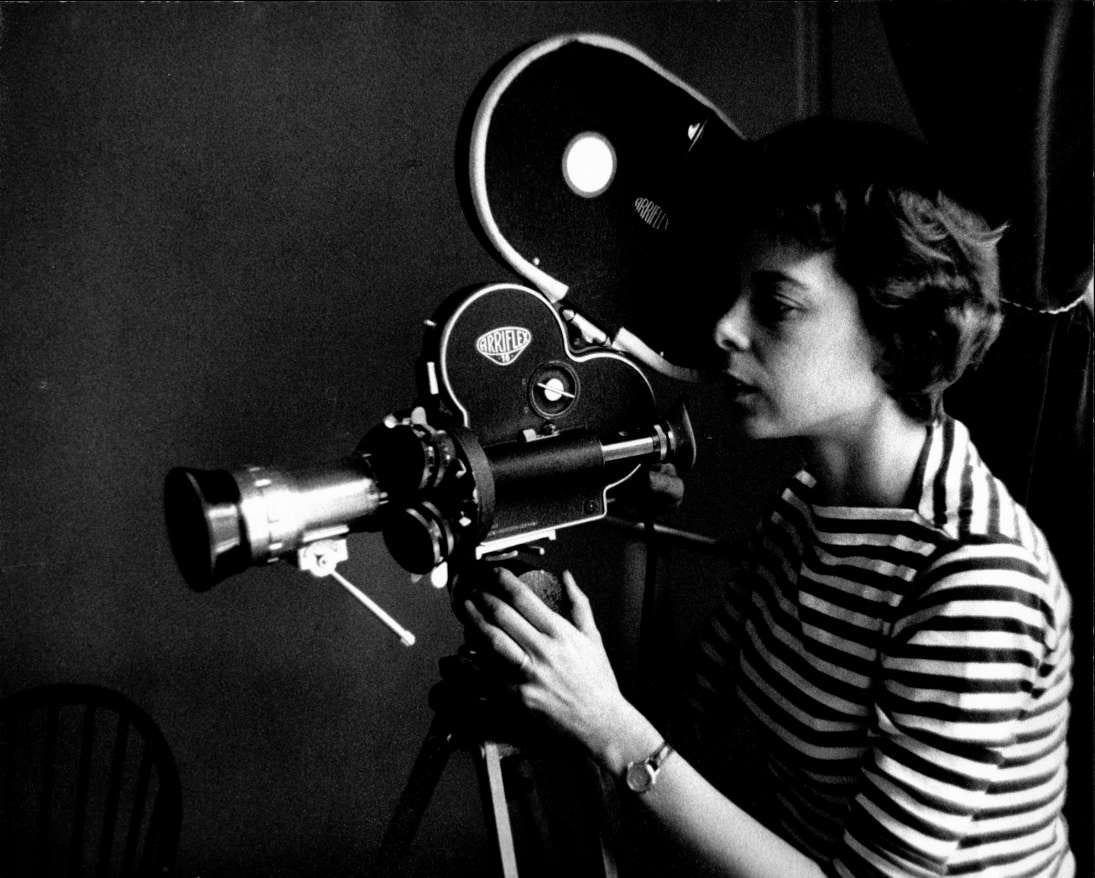
Shirley Clarke made films that should have changed everything. They did change things, just without her name attached. This is the story of an artist who was erased not because her work failed, but because the culture wasn’t built to hold it.
She made films the way bebop musicians made music. Movement first. Energy first. Structure arriving through the work itself rather than imposed before it began.
Then film history erased her.
Clarke began as a dancer and choreographer, and that training shaped everything that followed. Rhythm was not something she added to her films. It was the foundation. Her editing feels syncopated, alive to interruption, comfortable with spontaneity in ways that classical Hollywood editing was specifically designed to suppress. When she discovered jazz culture in New York during the 1950s, she recognized kindred territory immediately. She moved directly within that world, knew its musicians, absorbed its methods, and eventually built films around the same principles of risk and immediacy.
That connection was not decorative. Jazz and Clarke’s cinema shared a deeper logic: the willingness to expose process rather than hide it, to let the seams show, to find form through doing rather than planning. Both traditions understood that the struggle toward expression was itself expressive.
Her breakthrough feature, The Connection, adapted Jack Gelber’s controversial stage play about heroin addiction and jazz musicians waiting for a dealer in a filthy apartment. Clarke blurred the line between documentary and fiction so completely that it created a new kind of unease. The musicians, including Freddie Redd and Jackie McLean, are not performing for the camera so much as enduring it. You watch them the way you’d watch something you weren’t supposed to see. That quality, once registered, doesn’t leave you.
Then came The Cool World.
Shot in Harlem in 1963 with nonprofessional actors, the film follows Black teenagers navigating poverty, violence, and gang culture with a handheld documentary urgency that American cinema had not seen before. American cinema in the early 1960s still largely presented Black life through stereotypes, sanitized social-message dramas designed to comfort white liberal audiences, or outright invisibility. Clarke placed the camera directly inside Harlem streets years before New Hollywood directors adopted similar techniques and received credit for inventing them. The debts are real even when they go unmentioned.
The film’s score by Mal Waldron deepens everything. His moody, restless jazz does not comment on the images from a safe distance. It inhabits them, feeling emotionally inseparable from the city itself, from the heat and pressure of the streets Clarke was documenting.
But her masterpiece is Portrait of Jason, made in 1967, and it remains one of the strangest and most powerful films in American cinema.
The premise sounds almost aggressively minimal. One man. One camera. One night.
Jason Holliday, a Black gay hustler, aspiring cabaret performer, raconteur, and survivor of immense social violence, drinks, performs, jokes, lies, seduces, collapses, and slowly disintegrates over the course of the film. Clarke and her collaborators remain mostly offscreen but psychologically present throughout, pushing and probing him, using alcohol and provocation and intimacy to strip away one performed self after another. The film becomes less an interview than an act of mutual exposure between filmmaker and subject.
In 1967, mainstream film barely allowed openly gay existence onscreen at all, much less a Black gay man controlling the frame for nearly two hours while the camera watched identity construct and deconstruct itself in real time. Clarke turned the ethical questions surrounding documentary filmmaking directly into the film’s subject. Who controls the image? Who exploits whom? Where does performance end and truth begin? These were not questions the film answered. They were questions the film embodied.
Ingmar Bergman called it the most extraordinary film he had ever seen. Trust that.
Portrait of Jason anticipated later documentary styles, reality television confessional structures, autobiographical performance art, and contemporary conversations about documentary ethics, arriving decades before any of those conversations became common. Clarke was not working ahead of her time in the romantic sense people use that phrase to soften neglect. She was working in her time, fully, with complete artistic clarity, and the culture simply failed to build the framework to recognize what she had made.
That failure had specific causes.
The rise of director-centered film culture in the 1970s celebrated male auteurs and organized film history around them. Women directors who had been working innovatively throughout the 1960s found themselves edged out of the emerging canon regardless of the quality of their work. Clarke’s films also resisted categorization in ways that made them difficult to market. They moved between documentary and fiction, improvisation and structure, intimacy and confrontation. Hollywood had no place for that. Even art cinema struggled with it.
Shirley Clarke’s final film is called Ornette: Made in America (1985), build around the Coleman orchestral piece, “Skies of America”.
It’s not a straight biography. She cuts together performance footage, interviews, some of the earliest music-video-style sequences ever made, and staged reenactments of Coleman’s childhood in segregated Fort Worth, matching his own harmolodic, non-linear approach rather than telling the story chronologically. Footage spans over two decades, some of it shot as far back as 1968. Interview and archival subjects include William S. Burroughs, Buckminster Fuller, Yoko Ono, Charlie Haden, Ed Blackwell, Don Cherry, George Russell, and Coleman’s son Denardo.
The spine of the film is Coleman performing “Skies of America” live with the Fort Worth Symphony Orchestra, intercut with everything else. Worth knowing there are two different “Skies of America” performances in circulation and people conflate them: the original is the 1972 studio recording with the London Symphony Orchestra under David Measham, released on Columbia, where Coleman himself was mostly restricted to alto solos because of a UK musicians’ union dispute. The Fort Worth performance in Clarke’s film came later, in 1983, tied to the dedication of the Caravan of Dreams venue in Fort Worth, and that’s the one you actually see and hear in the movie.
By the time she died in 1997, she existed more as a whispered legend than an active cultural presence. Only in the last two decades has her reputation recovered, through restorations, retrospectives, and critical reevaluation that is still ongoing.
She belongs to the same cultural ecosystem as the jazz musicians who were her contemporaries and collaborators. Artists trying to create forms free enough to hold contradiction, instability, and lived experience without sanding them down into something easier to sell. Like the best jazz of her era, her films resist clean containment. They move. They interrupt themselves. They expose the process of making rather than concealing it behind a polished surface.
And as happened with many jazz innovators, her originality cost her decades of neglect before later generations recognized what had been there the entire time.
That is not a footnote. That is the story.
View the Trailer for Ornette: Made in America
View The Connection
Next Tuesday: Tony Scott - Too Original to Be Famous, Too Good to Stay Forgotten
Tony Scott was one of jazz’s great originals and genuine outsiders, a figure who could have been famous but chose something richer: a life of perpetual musical discovery across cultures and continents.