

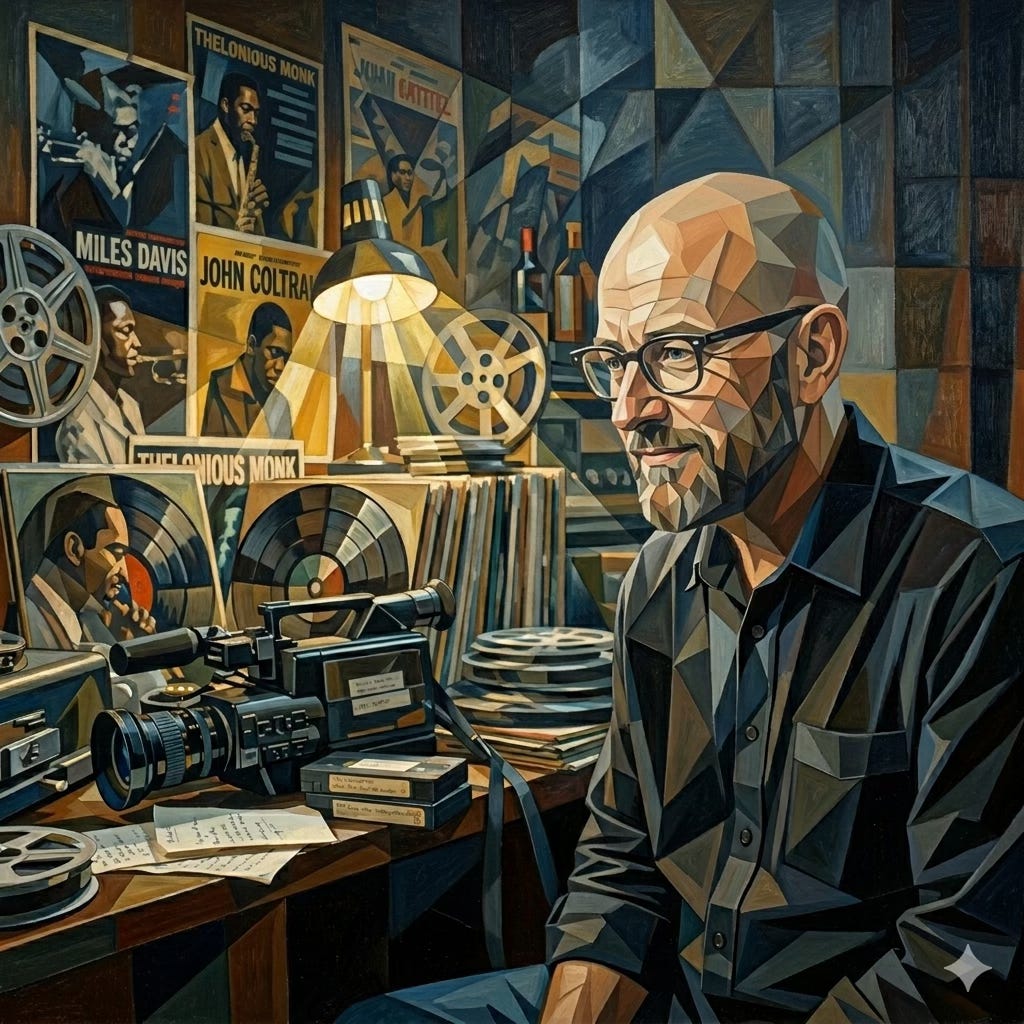
The night I posted my first jazz video on YouTube, March 9, 2006, the platform had been alive for barely four months. There was no audience, no algorithm to speak of, no reason to believe anyone would ever find it. I uploaded a performance clip by Sonny Rollins, titled it “The Bridge,” and waited.
What came back surprised me in a way I had not expected. Not just viewers, though those arrived too, slowly at first and then in waves. What came back was a sense of purpose I had been circling for years, the feeling that the camera, the music, and the audience had finally found their right relationship to each other. Twenty years later, that relationship is the most sustained creative project of my life.
To understand how I got there, you have to go back further.
By 2006 I was already deep in the jazz world, producing websites for Sonny Rollins, Billy Taylor, and Joe Lovano, connected in ways most people only dream about. But something was pulling me back to filmmaking, back to the instinct I had developed studying under Martin Scorsese at NYU.
Two things made the return possible. The cost of production had collapsed: a camcorder, a computer, and you were in business. And then YouTube arrived, handing every filmmaker on earth a free global distribution platform. The timing felt less like luck than like the world finally catching up to an idea that had been waiting.
Since I was already in the room with Sonny, Billy, and Joe, picking up a camera felt like the next logical step. Dave Liebman came into the mix shortly after. Both Billy and Dave opened their archives to me, handing over footage to post alongside the new material I was shooting. There is no Jazz Video Guy without those four men.
My history with jazz on the web goes back further still. In 1994 I co-founded Jazz Central Station, the first major jazz website, after two decades of writing about jazz for DownBeat, JazzTimes, and others. The internet was raw and largely uncharted, and the possibilities were immediately obvious to anyone paying attention. A few years later I launched Bird Lives, one of the first jazz blogs, writing under the name the Pariah, filing impassioned dispatches against the injustices of the music business. I made a few enemies. I had no regrets.
Then in 1999 I produced the first professional live streaming broadcasts from Birdland. I remember standing in that room while the Dave Brubeck Quartet played, watching the signal go out over the web to an audience that barely knew such a thing was possible. What I did not say in the room that night was that Dave Brubeck had come to my high school in 1964, my first jazz concert. Three decades later I had interviewed him at his home in Wilton, Connecticut, a house designed by Frank Lloyd Wright. Life in jazz has a way of completing its own circles.
The Birdland footage of Brubeck is gone now, a real loss. But highlights from that same series, featuring Michael Brecker, Joe Lovano, and Dave Liebman in the Saxophone Summit, survive on the channel to this day. History, preserved by luck as much as intention.
In the early days I posted three to five times a week, driven by a formula I had developed in the mid-nineties: compelling content, easy to access, regularly updated. Back then I could post a ten-minute performance video and eighty percent of viewers would watch it to the end. Within a few days, thousands of views.
That world is gone. Today only twenty percent of viewers watch a full video, and at least half bail after the first minute. The attention landscape has been shattered across a dozen competing platforms, and what used to feel like a conversation now feels, on bad days, like shouting into a canyon. Every video I post is a small act of faith. Sometimes I make something I believe in deeply and the silence that follows is deafening. But videos have long lives. People discover them months or years later, share them, and suddenly the numbers multiply. Time, in that sense, remains on my side.
Over twenty years the channel has built something genuinely rare: more than 3,000 videos combining original documentaries with archival classics, a living library where new work and jazz history sit side by side. Fifty million views. 130 countries. An audience that spans every corner of the planet.
I will not pretend it has been lucrative. In the first fifteen years, YouTube paid me approximately $15,000 total. When I began posting more archival content, the platform questioned my status as a creator. I decided the content mattered more than the minimal commissions and turned off monetization. To this day I receive up to 100,000 views a month and earn nothing from it except the respect of my audience. I piece together an income from wherever I can find it. Living in Mexico for the past three and a half years has helped cut expenses dramatically.
But the financial reality of my situation is minor compared to the larger injustice I watch play out every day. Ordinary people post their favorite music out of love, wanting to share something meaningful with the world. The labels collect the ad revenue. The musicians get nothing. These are working artists, dues-paying professionals whose life’s work draws millions of views, and the platforms that profit from that work have found an elegant way to cut them out entirely. Streaming operates the same way. I have sat across the table from musicians I revere who cannot pay their rent from the music they made, music that is being heard by more people than ever before. The system has never been designed to serve the artists. It has always been designed to extract from them. What YouTube and Spotify and the rest have accomplished is making that extraction feel inevitable, even natural.
It is not natural. It is a choice, made by people with the power to make different choices.
What keeps me going is not the economics. It is the knowledge that this archive exists, that it is growing, and that it matters. No one can predict the future, but I feel certain that if humanity survives another twenty years, people will still be listening to this music and finding their way to these videos. The Coltrane centennial is this year, and I am producing a series of short documentaries in support of my book, How John Coltrane Changed My Life, each episode featuring a musician whose life has been touched by this extraordinary creator. My hope is that the series brings more people to Trane, to his story and to his music, the way his music once found me.
When I look at the world today it grows harder and harder to hold onto hope. I cannot change the horrors we are forced to witness. But I can bring some joy and positive spiritual energy into this world, and I count myself fortunate to be doing something meaningful during the time I have.
As one of my mentors, Ben Hecht, once said when asked what wisdom he had gathered over a long life: “I only know one thing, how to keep going.”
That is still the whole of it.
I’ve been a fan of your work since it began. I appreciate all of the important videos you’ve produced and presented, and it’s always been obvious that there is passion and love embedded in what you do…for the music, and the people who make it.
It’s hard to reconcile life as an artist, especially if it’s so difficult to simply survive. I have worked hard all of my life making music and working to support it. I feel free of the desperation now at 62 years old, with a great partner in life - a wife who also has her own business and supports my music addiction.
When I started out it seemed the business was more tangible. Young artists have to be more creative than ever in today’s world. I believe the overlords have made it confusing and difficult on purpose, like everything else in our current world.
I will keep making music until I can’t anymore, because I must. It’s such a huge part of who I am and the act of making it far exceeds any other rewards that follow (or don’t). The upside is that my art has gotten better and more authentic to me since I’m no longer chasing the brass ring. I’m perfectly happy to share my music here on Substack and Bandcamp with no gatekeepers or restrictions, but that’s cold comfort to young artists (many of whom with big college loans to pay back) who need to find their way. All I can say is, the world is a better place with art in it, so I hope we keep finding a way.
Thanks again for what you do, Bret!
All I can do is to thank you and realize I am fortunate to be a recipient of your dedicated work. God bless you, Jazz Video Guy!