

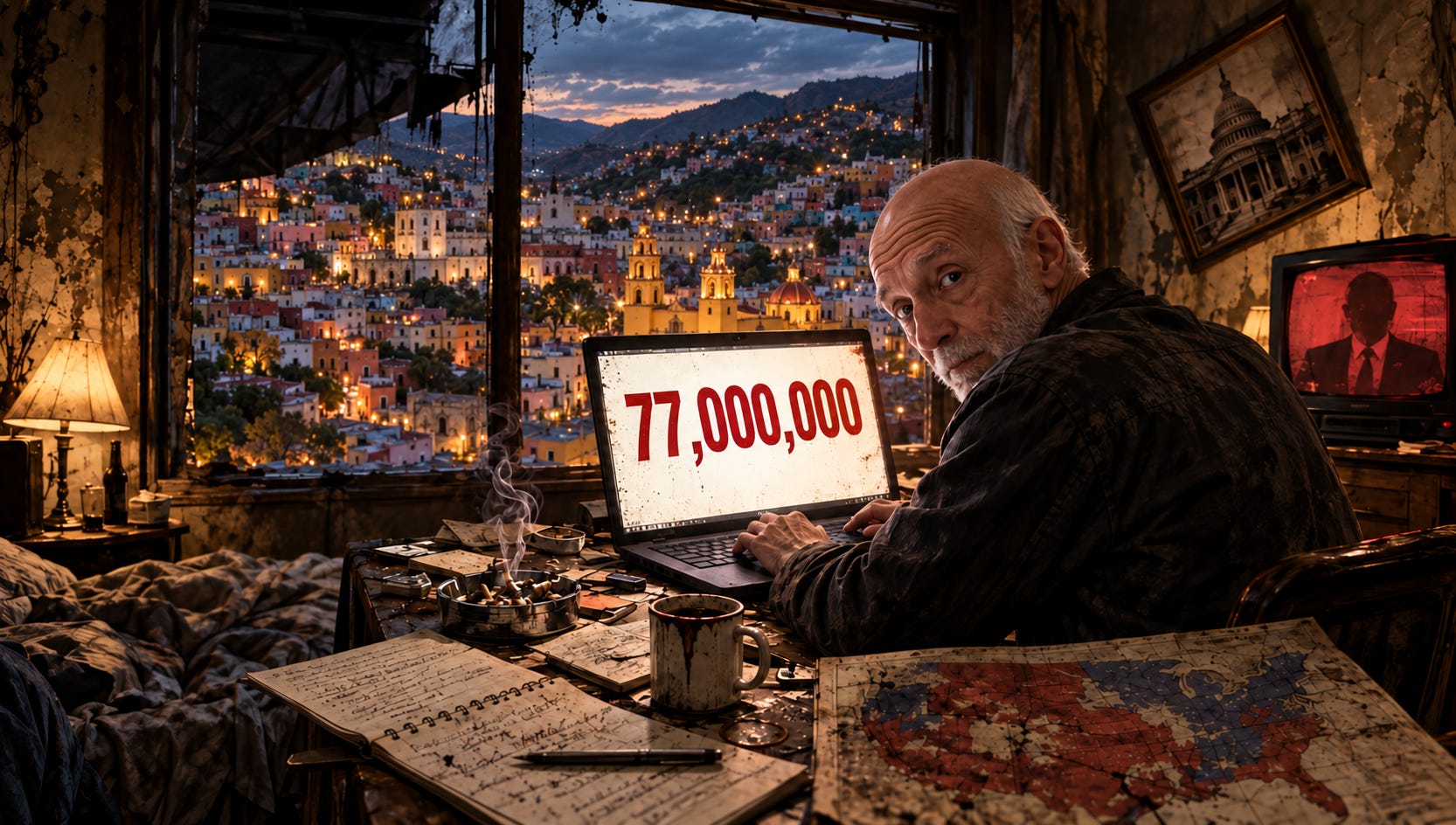
On the morning after the 2024 election, I sat in Mexico refreshing the results. Donald Trump had won again.
I kept clicking. Somewhere in my educated brain lived the belief that a sufficiently irritated man could reverse an election with his index finger.
More than seventy-seven million people would vote for the bastard. Throughout the campaign, I had wondered how anyone could do that. By morning, I was wondering how I had become such an authority on people I plainly didn’t understand.
I had expected America to improve. Education would spread. Younger generations would abandon inherited prejudices. Opportunity would eventually reach the people waiting outside the banquet.
History was moving in the right direction. I had read books confirming this, mostly by people who agreed with me.
My contribution was to remain correctly informed and occasionally furious.
For decades, I had listened to musicians, writers, cab drivers, bartenders, and people who never appeared on television explaining what Americans thought. Listening was my work. Surely some understanding had accumulated.
Yet I had spent years writing about music created by Black Americans, hearing how genius offered no protection against humiliation. I admired their persistence. I gave less thought to the country that kept making it necessary.
The evidence was there. I had arranged it around my optimism.
Then Mexico began interfering with my system.
People I met seemed interested in me without first establishing my market value. My work, clothes, and car carried less weight than I expected. I kept waiting for the qualifying questions.
Apparently, I could just be there.
This took adjustment. In America, introductions often felt like the opening minutes of a loan application. Occupation? Neighborhood? Relevant achievements? We smiled while invisible appraisers crawled through the ductwork.
In these new relationships, I felt less inspected.
I hadn’t discovered a country populated entirely by saints. Particular people were showing me kindness, and their kindness revealed something unpleasant about my own habits. I had grown accustomed to ranking people while calling it getting acquainted.
They seemed more interested in how we treated each other.
Compassion. At my age, this should not have qualified as breaking news. Nevertheless, we interrupt your regularly scheduled opinions.
That experience complicated my response to the election.
I still considered Trump cruel and dangerous. But I had extended my judgment of him to everyone who voted for him. Millions of people filed away under one convenient heading. No interviews necessary.
For someone who claimed to listen, I had developed an efficient method of avoiding it.
I also had the luxury of conducting this reckoning from Mexico.
Leaving required resources and freedom many people lack. I could choose my address and shut off American news. Other people couldn’t shut off the rent.
Distance helped me see certain things. It also allowed me to look away.
After the election, I revisited explanations I already knew: closed factories, vanished jobs, towns watching their young people leave.
The advice had been relentless. Retrain. Relocate. Adapt. Become the sort of person the economy currently finds attractive. Please submit a new personality by Friday.
I had accepted too much of this. Better jobs would emerge. Education would help. The market would adjust.
I rarely asked what happened to people during the adjustment. Presumably they waited somewhere, like luggage.
Then came the pandemic and higher prices. People needed groceries and rent money. An economist could explain inflation beautifully without making a dent in the checkout total.
I understood the explanations. I understood less about the humiliation of working, following the rules, and still needing help.
That doesn’t tell me why someone voted for Trump. It does reveal how little attention I gave to what they might want rejected.
Trump offered targets: Washington, immigrants, elites. His explanations assigned blame and promised somebody else a miserable afternoon.
I heard the insults and saw disqualification. I was slower to consider whether my disgust helped sell the ticket. If people felt ignored by respectable society, perhaps watching respectable society require smelling salts had entertainment value.
Perhaps. I needed to ask, instead of installing another theory where a conversation belonged.
And hardship explains only so much.
A donor seeking tax cuts, a worker fearing unemployment, and a churchgoer voting on abortion have different priorities. Someone resentful of racial equality brings another motive entirely.
Some wanted relief. Some wanted advantage. Some wanted permission.
Calling everyone desperate would be another shortcut. A flattering stereotype still saves you the trouble of meeting anybody.
Compassion also leaves responsibility intact. Losing work doesn’t require blaming immigrants. Feeling humiliated doesn’t justify humiliating someone else.
I can care about what happened to a person and condemn what that person chooses to do.
I had wanted Trump to be a temporary malfunction. Eventually, competent adults would arrive carrying tools.
Meanwhile, economic arrangements I accepted kept producing damage.
Housing became an investment opportunity for people who already had housing. Companies eliminated jobs and announced savings. The panic went home with the employees, where it received considerably less business coverage.
Who benefited? Who paid? Who could change the rules?
I had treated progress as something history provided. Other people had organized, risked livelihoods, endured threats, and taken blows. I inherited their victories and developed confidence in the process.
Their opponents remained at work.
Now almost two years have passed. On November 3, Americans vote in the midterms.
I want Congress to challenge Trump and demand answers. I want consequences more substantial than a senator announcing profound concern before lunch with a donor.
I want a decisive rejection.
But wanting something has never made me a reliable forecaster.
Even victory would leave the presidency in place. Rent, illness, and insecure work would remain. Winning politicians would owe people more than an email announcing the next emergency fundraising deadline.
I would owe something too.
I could begin by listening without preparing my rebuttal. Asking questions that might upset my conclusions. Remembering the people in Mexico who offered warmth before knowing whether I had accomplished anything worth mentioning.
I will watch Tuesday’s returns. I will probably refresh them like a gambler certain the machine owes him.
If they go my way, I’ll celebrate.
Wednesday, somebody will still need help. I hope I notice before checking whether my side has won another argument.
In the US one of the first things a stranger asks is what you do for a living. When I went abroad for the first time I was astonished to realize no one asked this ever.
"Apparently, I could just be there."
Beautiful Bret, love it <3
Re: This Election
Occasionally, I'm catching myself, out of the corner of my mind's eye, relishing the utter destruction of the Trumper sense of self.
Then I realize that that's just mean...a horrible way to treat another human being, and an awful way to treat yourself.