

There are films that change the art of cinema, and there are films that change history. Rarely does a single movie do both — and rarely in such a devastating way. The Birth of a Nation (1915) is both the movie that turbocharged modern cinematic storytelling and a work of racist propaganda that helped popularize the Ku Klux Klan in the 20th century. To watch it today is to experience one of the most uncomfortable collisions in all of American culture: genuine artistic innovation in service of breathtaking hatred.
What Is the Film?
The Birth of a Nation is a 1915 American silent epic drama directed by D.W. Griffith and starring Lillian Gish. The screenplay is adapted from Thomas Dixon Jr.’s 1905 novel and play The Clansman: A Historical Romance of the Ku Klux Klan. Its plot, part fiction and part history, chronicles the assassination of Abraham Lincoln by John Wilkes Booth and the relationship of two families in the Civil War and Reconstruction eras — the pro-Union (Northern) Stonemans and the pro-Confederacy (Southern) Camerons.
Part I takes the viewer through the antebellum period and the Civil War, ending with the assassination of Abraham Lincoln. Part II picks up during Reconstruction and paints the post-war landscape as a world turned upside-down with newly freed Black people running amok, and the only way to set things right is through vigilante violence from the KKK.
The film was, by any measure of its era, a spectacular production. According to the official souvenir program for its first road-show engagements, 18,000 people and 3,000 horses appear on the screen; making the KKK uniforms took up more than 25,000 yards of white cloth; and nearly 200,000 feet of film were shot, edited to 12,000 for the final cut, which ran about three hours and ten minutes.
Is It Racist? Unambiguously, Yes.
The short answer is: absolutely. The negative side of its reputation is explained by a single overwhelming factor — the unapologetic racism that runs through the picture from beginning to end.
The film portrays African Americans as inherently inferior, perpetuating negative stereotypes that depicted Black people as lazy, corrupt, and dangerous. Perhaps most egregiously, it portrayed Black men as sexually aggressive toward white women — a common and deeply harmful trope that justified violent actions like lynching in the Jim Crow South. The use of blackface only intensified the film’s offensive portrayal of Black people.
The three-hour silent film glorified the Ku Klux Klan as the saviors of the South, portraying freed Black people as brutish and bestial. The film’s source material makes this agenda explicit. Describing his novel, author Thomas Dixon wrote that his object was to teach the North “the awful suffering of the white man during the dreadful Reconstruction period” and to celebrate the KKK as “a veritable empire of the South, to protect the Southern country.”
The romantic imagery of the lush, happy plantation, where love blossoms, idealizes the slave system as benign. Scenes like this place the story, emotions, and characters of white Southern and Northern Americans center stage, reconciling Black characters to the margins of the story.
Film critic Roger Ebert captured the impossible tension at the heart of the film when he wrote that modern viewers who are “evolved enough to understand what they are looking at find the early and wartime scenes brilliant, but cringe during the postwar and Reconstruction scenes, which are racist in the ham-handed way of an old minstrel show or a vile comic pamphlet.”
The White House Screening
Perhaps the most jaw-dropping chapter of this film’s history is how it came to be screened at the highest levels of American power. On February 18, 1915, projectionists dressed in evening attire showed The Birth of a Nation on the white wooden panels of the East Room of the White House. Dixon had been a Johns Hopkins University classmate of Wilson, and that connection allowed Dixon to screen the film for the president, his daughters, and a few cabinet members.
Dixon’s motives were not purely social. Realizing the controversy his film would create, Dixon saw a way around a possible ban through the White House. He believed that telling would-be censors that the president had viewed his creation would prevent any national restriction on its release. It was a calculated political maneuver dressed up as a movie night.
The Birth of a Nation was the first movie shown in the White House, in the East Room, on February 18, 1915. It was attended by President Woodrow Wilson, members of his family, and members of his Cabinet. Following this, Dixon was able to arrange a second presentation one day later for members of the Supreme Court after Chief Justice Edward D. White agreed to attend.
Wilson reportedly praised the movie enthusiastically — a reaction that, historians note, was entirely consistent with his own racial views. After that private screening, Wilson reportedly stated, “It is like writing history with lightning, and my only regret is that it is all so terribly true.” Wilson’s statement was inaccurate, at best. The events and images that the silent film presented were untrue stereotypes; the events, politics, and culture of the Reconstruction era were the opposite of what occurs in the film’s plot. Whether Wilson said those exact words remains disputed by historians, but his overall approval of the film is not seriously in question.
The Reaction: Protest, Riots, and Real-World Violence
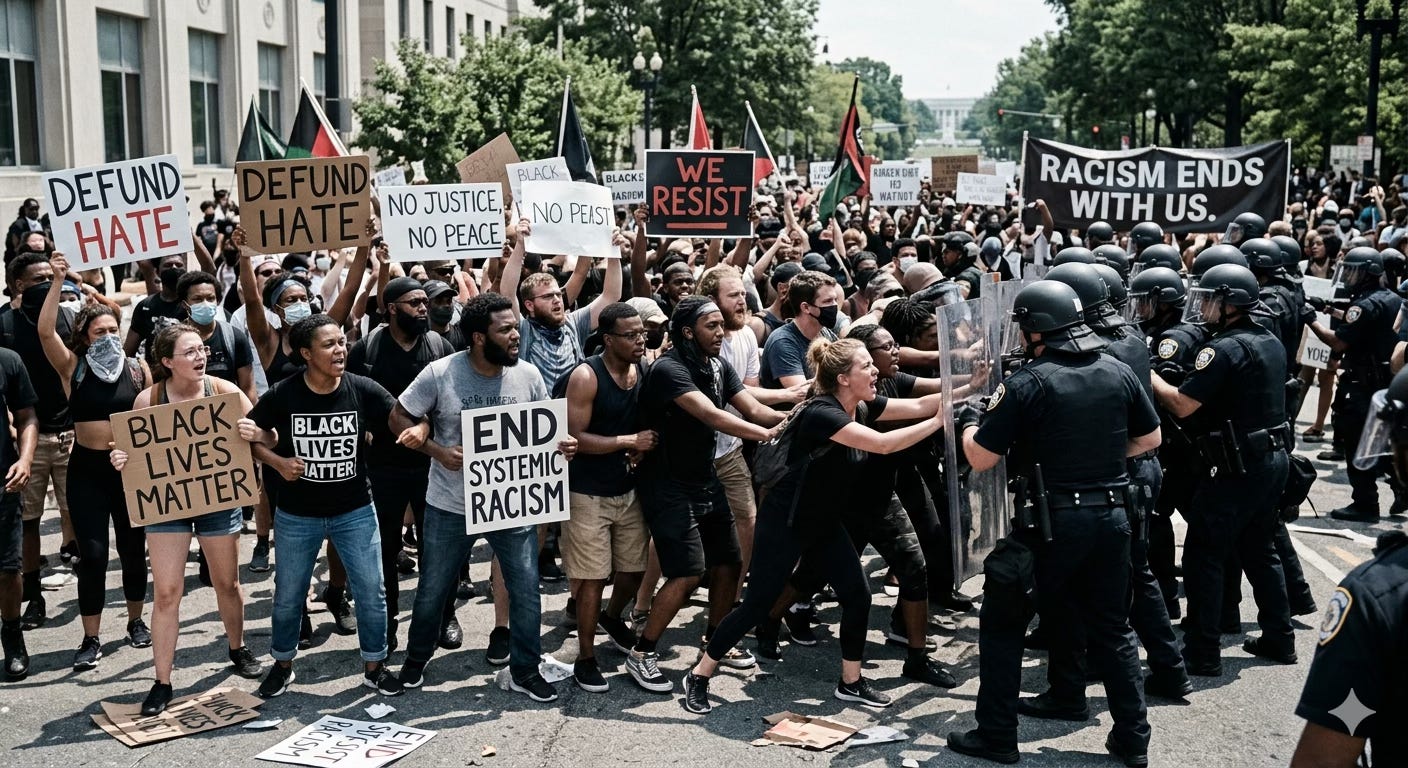
Not everyone was celebrating. When the film was released, riots broke out in Philadelphia and other major cities in the United States. The film’s inflammatory nature was a catalyst for gangs of white people to attack Black people. The mayor of Cedar Rapids, Iowa was the first of twelve mayors to ban the film in 1915 out of concern that it would promote racial prejudice. The NAACP set up a precedent-setting national boycott of the film. Additionally, they organized a mass demonstration when the film was screened in Boston, and it was banned in three states and several cities.
Civil rights organizations such as the recently formed NAACP challenged the film’s portrayal of African Americans and unsuccessfully attempted to have it banned or censored. African American writer James Weldon Johnson wrote in 1915 that the film did “incalculable harm” to Black Americans by creating a justification for prejudice, racism, and discrimination for decades to follow.
The harm was not merely cultural. An estimated 10 million Americans — roughly one-fifth of the adult white population — turned out to see the movie in its first two years, paying as much as $2 a ticket, forty times the going rate. Research has since documented a direct correlation between screenings of the film and spikes in racial violence. W.E.B. Du Bois noted that more lynchings occurred in 1915 than had occurred in the previous decade. A Harvard economics study found that screenings coincided with sharp spikes in lynchings and race riots, with one dataset showing lynchings rising fivefold in the month after local arrival.
A Legacy That Cannot Be Separated
Released in 1915, The Birth of a Nation has been considered innovative among its contemporaries in the early days of film. According to film historian Kevin Brownlow, the film was “astounding in its time” and initiated “so many advances in film-making technique that it was rendered obsolete within a few years.” The Library of Congress has preserved it in the National Film Registry as culturally and historically significant — a decision that continues to generate debate.
But technical greatness does not — cannot — redeem moral catastrophe. Social reformer Jane Addams, speaking during the film’s original run, called it a “pernicious caricature of the Negro race” that was “unjust and untrue,” and observed that the film uses real history only to make its falsehoods more insidious — promoting, in her words, “the most subtle of untruths — a half truth.”
The Birth of a Nation is a film that must be understood, not celebrated. It is a reminder that art can be weaponized, that prestige can launder propaganda, and that the stories a nation tells about itself have consequences — sometimes deadly ones.
Watch The Birth of a Nation
A very good read. I didn't know about this movie, although the title is familiar. Safe to say that even a "masterpiece" can cause tremendous pain, suffering and long-lasting damage to society at large! I haven't decided if this is something I can sit through. It hits a little too close to home, given how the current administration plays so fast and lose with the truth and tells too many lies to keep track of. Thank you for continuing to bring both important current and historical facts to our attention!