

A man leaves a country and thinks he is escaping something. He arrives somewhere older and finds out he was only escaping himself. What follows is a report from the other side of that discovery, filed from a city that has been outlasting empires since before the United States existed as an idea.
Mexico has a public relations problem in the United States. The country exists in the American imagination as a rotating slideshow of cartel shootouts, spring break blackouts, gated resorts, tequila marketing, and frightened cable-news graphics designed by men who look like undercooked shrimp. Ask the average American what Mexico feels like and you get answers assembled from airport televisions and movies where every scene south of the border is filtered yellow, as if the entire nation exists inside a nicotine-stained hallucination.
Then you arrive in Guanajuato and the whole cheap cardboard mythology catches fire.
I know because it happened to me.
I have lived in the capital city of Guanajuato for nearly four years now with my partner Sherrie and our cats Mango and Melon, and the first thing this place does to your brain is destroy your appetite for simple explanations. Mexico is too old, too layered, too contradictory, too alive for the lazy summaries Americans love to slap onto foreign countries between bites of drive-thru chicken.
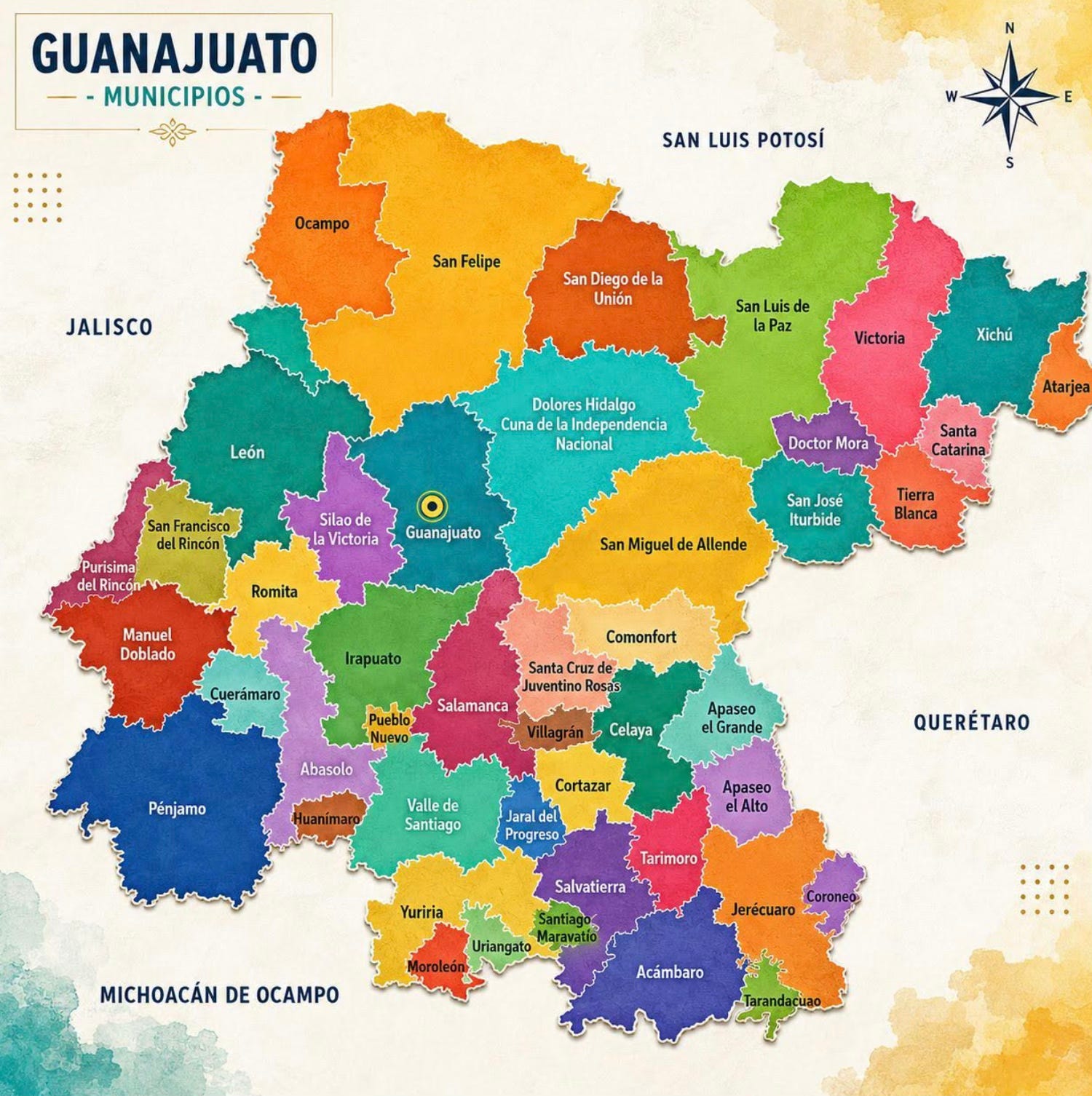
Guanajuato state alone contains enough cultural density to occupy several nations.
This is the birthplace of the Mexican War of Independence. The fuse was lit here. Miguel Hidalgo stood in Dolores Hidalgo in 1810, rang the church bell, and kicked open the door to a revolution that reshaped an entire continent. Americans talk about 1776 with endless cinematic reverence. Here, the revolutionary story still breathes in the streets instead of hiding behind gift shops and historical reenactors sweating through polyester uniforms.
Then there is the silver.
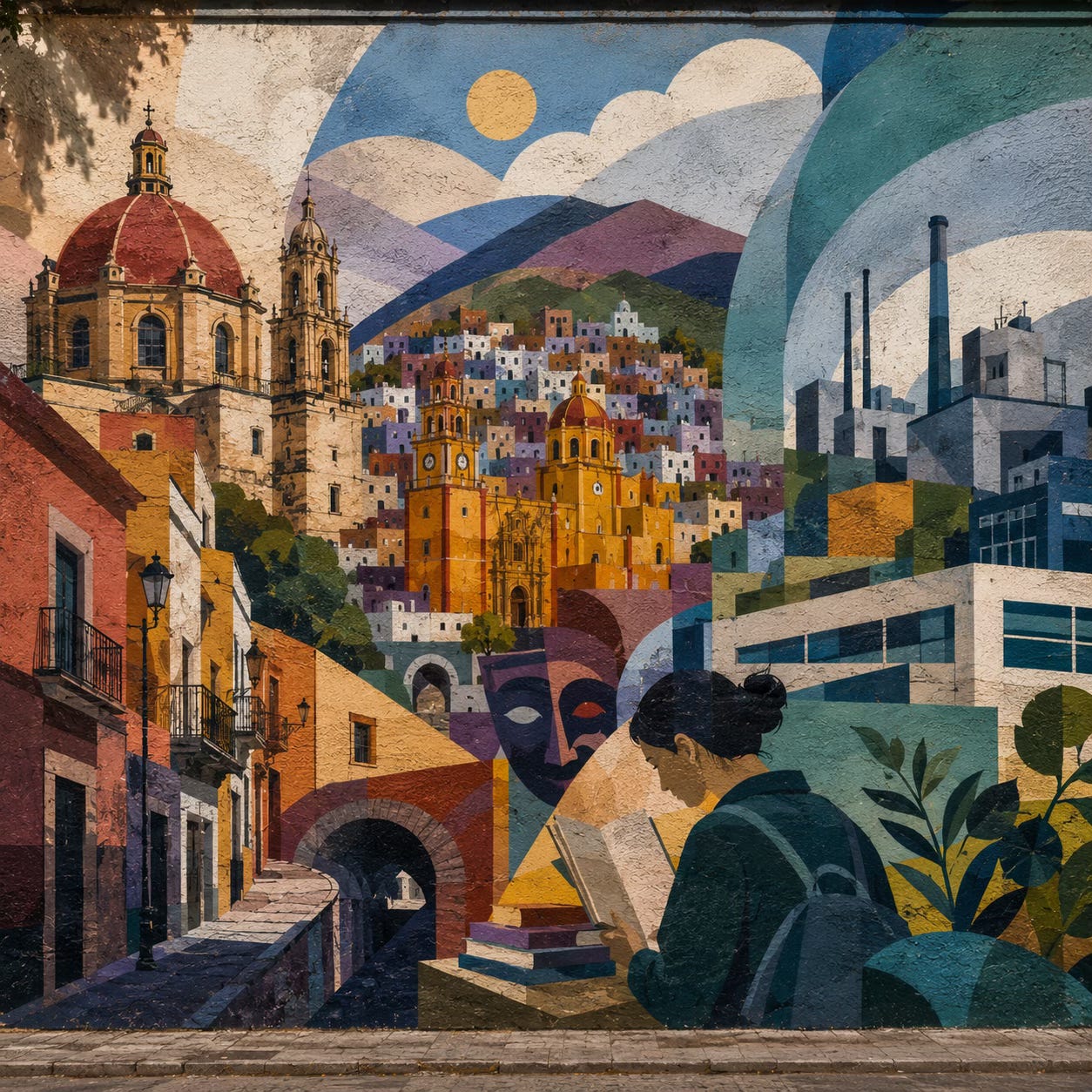
For centuries the mines of Guanajuato pumped unimaginable wealth into the Spanish Empire. Mountains were hollowed out to feed European ambition. Entire cities rose from the ore buried beneath these hills. The capital itself looks less like a planned city than a fever dream suffered by a baroque architect trapped inside a canyon with access to dynamite and religious obsession.
The city crawls vertically. Houses climb hillsides in impossible colors. Alleyways twist through stone. Roads disappear underground into tunnels carved directly through the mountain. At night the whole place glows as if someone spilled a jewelry box down the side of a ravine.
And unlike many historic cities preserved in amber for tourism, Guanajuato still behaves like a real place. Students stumble through plazas at 2 a.m. Old women carry groceries up staircases steep enough to qualify as religious tests. Street musicians drift through the callejones singing songs that bounce off the stone walls hard enough to rearrange your emotional chemistry.
The university matters here. Art matters here. Language matters here. Every October the Festival Internacional Cervantino floods the city with theater, dance, experimental music, symphonies, puppets, political performance art, jazz, avant-garde chaos, and enough intellectual intensity to make parts of the United States look spiritually embalmed.
You sit in a plaza drinking wine while a string quartet performs beside a church built before the United States existed. Then you walk ten minutes and hear college kids blasting banda music beside a taco stand at one in the morning while somebody’s uncle argues about football Mexicano loud enough to wake the dead.
That is Guanajuato. Nothing cancels anything else out. The contradictions stack on top of each other until they become the identity.
The religious life here carries the same complexity. American coverage of Catholic Mexico tends to flatten faith into either exotic spectacle or political talking point. Living here changes the scale of it. Holy Week in Guanajuato is not content production for tourists with expensive cameras. Entire families move through the rituals with emotional seriousness. Pilgrims walk long distances into the city. Churches fill with music, silence, grief, incense, exhaustion, devotion, boredom, gossip, children, old men, teenagers checking phones, candles, flowers, and actual human life instead of curated spirituality packaged for social media.
Then you leave the capital and the state mutates again.
León feels industrial and muscular. Leather factories, shoe manufacturing, warehouse corridors, business hotels, traffic. An economic engine disguised as a city. It produces a staggering percentage of the footwear for Latin America while still holding onto neighborhood markets and old plazas where people sit for hours talking with no visible concern for productivity metrics.
Then there is San Miguel de Allende, the city Americans love to turn into a metaphor for themselves.
San Miguel has been colonized by American self-mythology so thoroughly that certain blocks feel less like a Mexican city than a therapy retreat with better architecture. Pink church spires rise above cobblestone streets while retirees from Oregon discuss property values over artisanal cocktails priced high enough to qualify as financial crimes in nearby towns. The colonial Disneyland reading is not unfair.
But the place still has genuine gravity underneath the boutique hotels and wellness branding, and the reason is not the aesthetics. Artists keep arriving because something in the city still resists full domestication. Writers, painters, musicians, filmmakers, exhausted professionals trying to remember whether they once had souls. The architecture hits you in the chest. Light behaves differently there. And no amount of green juice tourism has fully extinguished what the city was before Americans decided it was the perfect backdrop for their reinvention narratives.
Drive north and the terrain opens into ranch country where charro culture still exists as lived inheritance rather than nostalgic performance. Men ride horses because horses remain useful. Families gather around charreadas with the casual familiarity Americans reserve for Little League games. The culture survives because people continue practicing it, not because tourism boards printed brochures.
The music changes with the geography. Mariachi. Huapango. Banda. Ranchera. Brass bands in plazas. Funeral processions with live musicians. Teenagers carrying tubas through side streets. Old men singing heartbreak songs in bars where the walls smell like beer, dust, and thirty years of accumulated loneliness.
Music here does not wait politely inside concert halls. It leaks into ordinary life.
And everywhere you encounter the collision between old Mexico and industrial Mexico. Colonial churches beside cellphone stores. Seventeenth-century plazas beside factories manufacturing auto parts for the global economy. Desert pueblos sitting a few hours from luxury wine tastings and rooftop jazz clubs.
Americans often speak about Mexico as though it were unfinished. Living here reveals the opposite. The country feels ancient in the deepest sense. Not old-fashioned. Not backward. Accumulated. Layer upon layer without erasing what came before.
The United States often demolishes its past every few decades and replaces it with parking lots, chain stores, and newer parking lots. Mexico leaves the previous centuries standing beside the current one. Sometimes literally. You walk past a colonial church, a taco stand, a university protest, a funeral march, a German car factory, and a mariachi band within the same afternoon.
You stop talking about “the real Mexico” because the phrase itself becomes absurd. Which Mexico? The intellectual Mexico? The industrial Mexico? The indigenous Mexico? The Catholic Mexico? The artistic Mexico? The ranch Mexico? The urban Mexico? The luxury tourism Mexico? The mining Mexico? The student Mexico? The exhausted working-class Mexico? The deeply traditional Mexico? The experimental contemporary Mexico?
They all exist simultaneously, often on the same block.
I am not Mexican. I will not pretend otherwise. I remain an outsider learning the language, learning the rhythms, learning when to shut up and observe. But living here long enough strips away the fantasy version Americans inherit through media repetition.
Mexico is not the cartoon.
It is stranger than the cartoon. Older than the cartoon. Funnier, harsher, warmer, more chaotic, more sophisticated, more communal, more exhausting, more emotionally alive. And if that makes you reach for your cable news graphics and your yellow filter, the problem is not Mexico.
The problem is you.
The right always needs a boogeyman to rail against. The horrible “other”. Someone to scapegoat for your perceived problems. Mexico and Mexicans have always been an easy target. Every time I go to Mexico, someone here invariably says, “well be careful.” Why? You are more likely to be killed by your government here.
La Verdad. Such a shame Americans are generally dismissive and ignorant of our ‘distant neighbor.’ Most don’t even know it by its proper name, the United States of Mexico.