

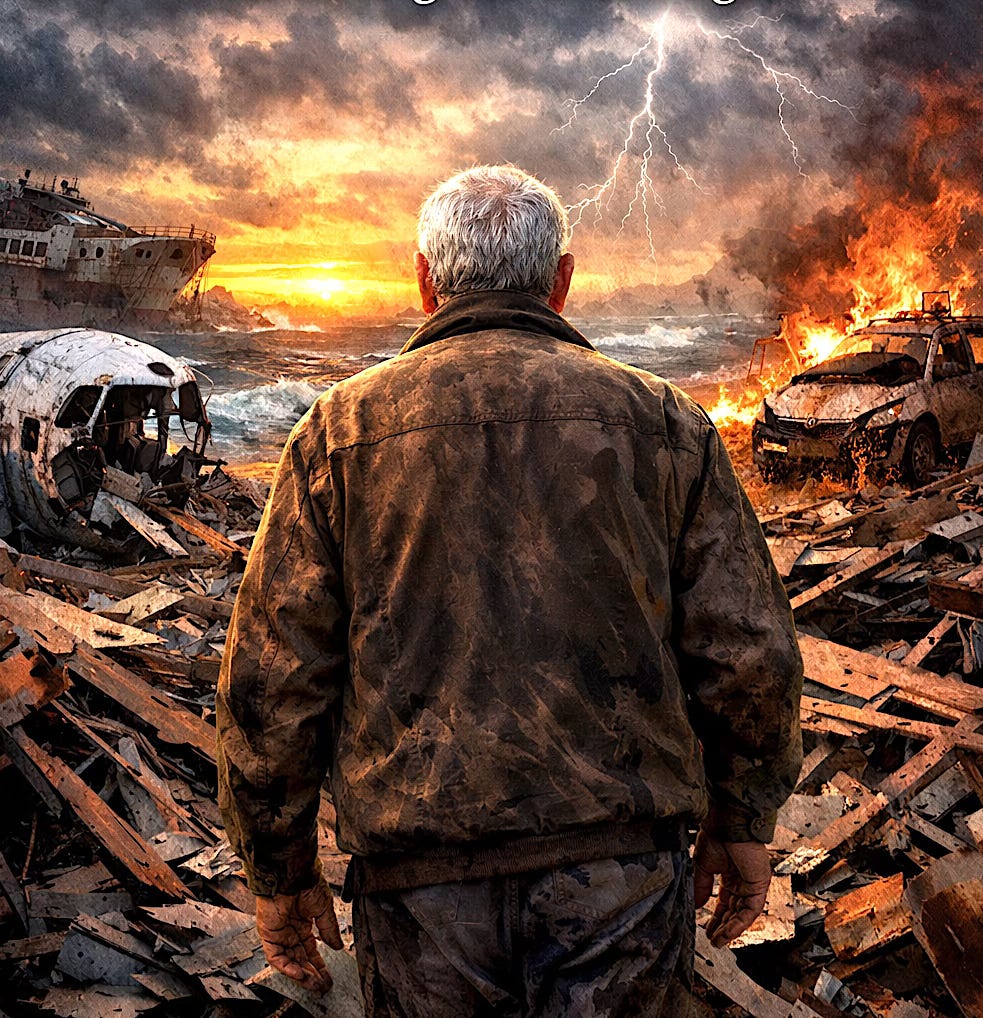
There’s a moment in every life when comfort shatters. The job ends. The relationship collapses. The diagnosis comes. The dream dies. You’re left staring at the wreckage, wondering how everything changed so fast.
That’s when the real choice arrives: do you let the pain break you, or do you use it to forge something stronger?
Pain isn’t optional. Suffering is optional, though most of us seem to sign up for the deluxe plan. Pain is what happens. Suffering is the story we tell about it—usually starting with “this shouldn’t be happening.” The trick, or so the philosophers and therapists keep saying, is to stop arguing with reality. Easier said than done, especially when reality has the upper hand.
Success seduces you into believing you’re the captain of your fate, until failure strolls in—drunk uncle at Thanksgiving—and reminds you who’s boss. Suddenly the self-image you’ve been polishing starts to crack. You see how much of your confidence came from applause, titles, or how many people returned your emails. It’s humbling, but also freeing—realizing the costume party’s over and you’re still standing there dressed as a superhero.
Growth doesn’t travel in straight lines. It zigzags, doubles back, and occasionally burns the map. You build something, the universe knocks it over, and you get to find out what’s left of you when the scenery changes. Nature understands this. Forests burn to make room for new life. Seeds crack open to start over. And humans, being slow learners, usually need a few disasters to catch up.
When life collapses, resist the urge to shout “Why me?” It’s always you. It’s everyone. Ask instead, “What’s this trying to teach me—besides patience?” Pain has a ruthless honesty. It clears out what doesn’t belong, even if you’re still paying rent on it. The job, the romance, the illusion—it all burns off so you can see what’s real.
Challenge is life’s gym membership. Nobody enjoys it, but the alternative is emotional flab. Every setback builds muscle—focus, humility, perspective. It’s free, though the workouts will wreck you.
A mind that accepts hardship without complaint doesn’t become saintly, just efficient. It stops adding extra drama. It learns to say, “Okay, this sucks. Now what?” instead of starring in its own disaster film.
Resilience isn’t a personality trait. It’s callus. You earn it through repetition. You show up, screw up, get up, and repeat until you stop making the same mistakes—or start charging for them as “experience.”
Real freedom isn’t the absence of pain. It’s knowing you won’t disintegrate when it comes. It’s the quiet confidence that you’ll survive the next catastrophe, even if you’d rather be somewhere else entirely.
Pain will keep showing up. Loss will too. That’s the price of having a pulse. The goal isn’t to avoid them—it’s to make sure they don’t waste your time. Extract the lesson, keep your sense of humor, and move on. Because in the end, the alchemy of adversity isn’t about becoming wise or enlightened. It’s about learning to laugh while you rebuild.
The process never ends.
And it ain’t easy—but it’s better than pretending you’re fine.
“I've been a puppet, a pauper, a pirate, a poet
A pawn and a king
I've been up and down and over and out
And I know one thing
Each time I find myself
Flat on my face
I pick myself up and get
Back in the race.”
I know one thing: How to keep going.
Cue the band and the kid from Hoboken.
Frank Sinatra. Son of Italian immigrants. Started as a skinny local singer. Survived by adaptation. Took losses, public backlash, career dips, and shifting tastes, then rebuilt each time with discipline, instinct, and timing. Survival was part of his method.
“Why me?” is always the wrong question people ask themselves. “Why not me” is the right question.
Indeed, stoicism goes a long way. Not sure, though, if suffering is optional inlight of extreme physical suffering. Still, acceptance is better than fighting it, to be sure. An attitude of gratitude helps, too, que no?