

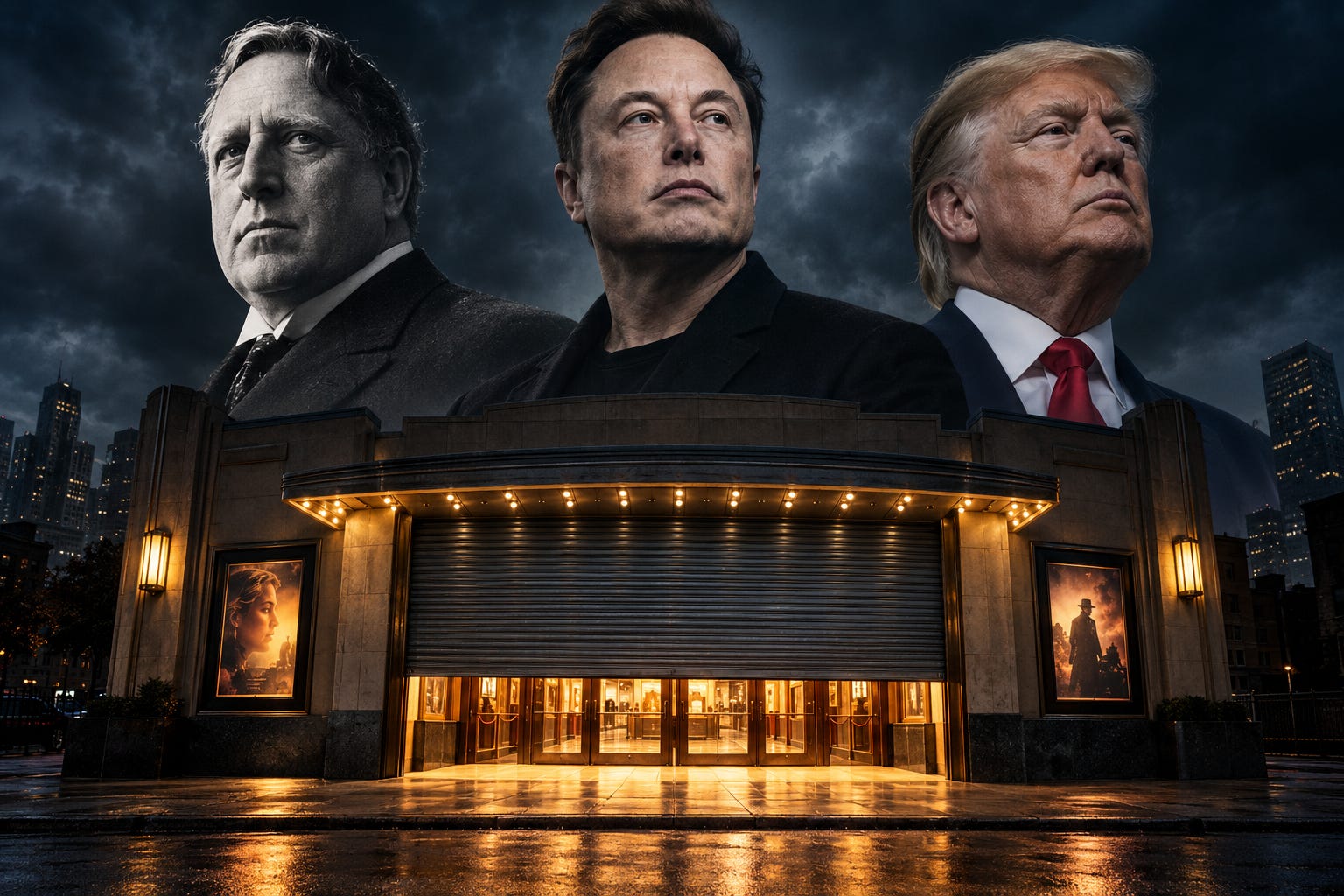
After a lifetime of making films, I remain interested in what happens when someone powerful dislikes one. Bad reviews are part of the business. So are empty theaters. A billionaire trying to make sure the theater stays empty deserves a different kind of attention.
William Randolph Hearst understood this long before Elon Musk bought Twitter or Donald Trump began threatening broadcasters. You can argue with a film. You can also make the people distributing it wonder whether showing it is worth the trouble.
In 1941, Hearst recognized enough of himself in Orson Welles’s Citizen Kane to want it stopped. He was especially angered by the perceived portrayal of Marion Davies, his companion, in the character of Susan Alexander. The movie was fiction, but the resemblance had consequences.
Hearst’s newspapers shut out the film’s publicity and advertising. For a time, the pressure extended to other RKO productions. Louella Parsons, his powerful Hollywood columnist, threatened legal action to prevent its release. Hearst’s representatives also threatened to expose scandals involving studio executives and stars. Suddenly, a film made by one studio had become everybody else’s problem.
Hollywood responded with a proposal that still astonishes me. Louis B. Mayer and other studio chiefs offered RKO roughly $800,000 to buy the film and destroy its negative and prints. RKO president George Schaefer refused.
Imagine the conversation. People who made their fortunes producing movies were prepared to pay for the destruction of one because they feared a newspaper publisher. Whatever they thought of Welles, they understood Hearst’s ability to hurt them.
The film survived, but survival was expensive. Major theater chains refused to show it. Its commercial prospects suffered. Later recognition cannot restore the audiences denied the opportunity to see it when it was new.
We tend to remember this as a victory because Citizen Kane became a landmark. I remember the other possibility: Schaefer could have accepted the money. We would be discussing a lost film, assuming we knew enough about it to discuss anything.
Now Alex Gibney has made Musk, a nearly four-hour documentary about a man whose appetite for influence extends well beyond electric cars and rockets. Musk has attacked the film and its director. His attorney, Alex Spiro, threatened a defamation lawsuit before its theatrical release.
The threat concerns a sequence involving Ashley St. Clair’s messages with Musk and what the film allegedly insinuates about Starlink and the 2024 election. Musk’s lawyer says the insinuation is false. Gibney’s company defends its reporting. A threatened lawsuit does not establish that a film is defamatory, and neither does a filmmaker’s reputation establish that every claim is correct.
I want the evidence examined. I also want to see the movie. Those wishes seem compatible to me.
Advertising became another obstacle. X, the platform Musk owns, reportedly refused paid promotion for the documentary. Other major platforms initially rejected ads too. Meta and YouTube subsequently reversed their decisions, describing the restrictions as errors. I cannot claim Musk ordered those companies to refuse advertising. The episode nevertheless shows how dependent filmmakers are on a few companies for access to potential viewers.
There was also reporting that Universal, which holds international distribution rights, was reconsidering the release because of political sensitivities involving the Trump administration. Universal subsequently maintained that it remained committed to releasing the film.
That distinction matters. Reported hesitation is not proof of an organized boycott. But the possibility that political consequences enter a distributor’s decision should concern anyone who wants documentaries to examine powerful people.
I would not blame Musk for every empty seat or limited booking. Bleecker Street has announced an October 9 opening in select theaters and an October 16 nationwide expansion. A documentary this long presents scheduling challenges even without a billionaire complaining about it.
Its larger opportunity may come through HBO, which is attached for a reported 2027 release. I expect considerable interest when people can watch at home. Four hours is easier to accommodate when you can pause for dinner.
Streaming has changed how films reach us. It has not eliminated the people who decide whether they reach us. Someone still owns the service, approves the spending, and decides how much attention a film receives. An enormous potential audience is useful only if the work is available and people know it exists.
Trump adds something Hearst and Musk cannot supply on their own: government authority.
The FCC ordered eight ABC-owned local television stations to apply for license renewals years ahead of schedule. The agency cited diversity and inclusion practices. ABC says the action retaliates against speech the administration dislikes. At the October 6 court hearing, its lawyer argued that the threat was already affecting editorial decisions. The government disputed the case, and the judge had not yet ruled.
These are station licenses, not a single license for the entire ABC network. Precision matters, particularly when discussing people who would happily use an error to dismiss the larger argument.
The larger argument remains disturbing. A broadcaster facing possible damage to its business must consider what happens after the next unfavorable interview or joke. Even if it ultimately wins in court, the uncertainty consumes money and attention while decisions about coverage continue every day.
Fear does some of its most effective work before anyone issues an explicit order. A documentary is passed over. An interview is softened. An executive decides the company has enough problems already. The explanation can sound perfectly reasonable. Nobody needs to announce that they were frightened.
What troubles me most is the work we never hear about. We can rally around a finished film with a famous director and a release date. It is harder to defend the project abandoned during development because financing disappeared, or the reporter whose editor decided to avoid a subject. There is no premiere to protest, no trailer to share. The audience cannot miss something it never knew was being made. That is why I pay attention to the hesitation as well as the final decision in these corporate offices.
I have no interest in granting filmmakers immunity from criticism. We make mistakes. We have obligations to our subjects and audiences. Wealthy people are entitled to dispute inaccuracies. Presidents are entitled to dislike jokes. Disliking something, however, does not entitle them to decide that everyone else should be prevented from encountering it.
The difference in resources is difficult to ignore. One side can pay lawyers indefinitely. The other has a film to finish, employees to pay, and a distribution agreement to preserve. A threat can achieve its purpose without ever becoming a successful lawsuit.
Hearst failed to erase Citizen Kane. That does not make his campaign harmless. Nor does an announced release settle the questions surrounding Musk, or a pending court case end the pressure on ABC.
At 77, I have seen enough to distrust the reassuring assumption that worthwhile work always finds its audience. People have to make that possible. Schaefer had to refuse the money. Distributors have to release the film. Broadcasters have to defend the decisions they make.
I want to watch Gibney’s documentary and decide what I think. I don’t need Elon Musk, Donald Trump, or an executive worried about offending either of them to make that decision for me.
Next Tuesday: The Drummer Who Made Revolution Listenable
Billy Higgins was a drummer with a million-dollar smile, and you heard that smile in his playing. He brought tremendous swing, warmth, and joy to every musical situation. His time felt effortless, his touch was light but deep, and he had a rare gift for making everyone around him sound better.
Before there was MUSK: The Movie there was MUSK: For The Man's Car. You're welcome. 💪🏽