

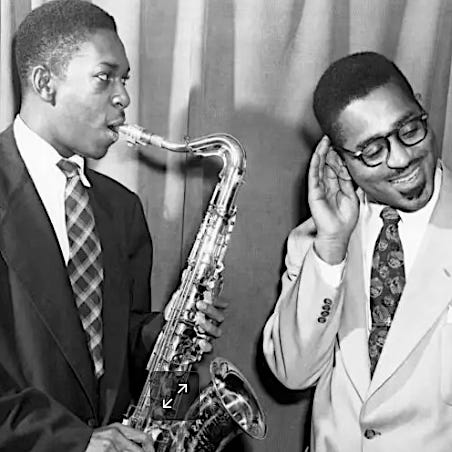
I can listen to the same jazz recordings I first heard when I was fourteen, some sixty-two years ago, and they still amaze me. They sound as good, if not better, than they did back then. That tells me something about both the music and the journey I’ve been on, a journey that, looking back, feels less like something I chose and more like something that chose me.
At fourteen, I was caught by the melody, by the energy of it, by something I couldn’t quite name but couldn’t shake. By fifteen, I already sensed, without being able to explain it, that this music was going to be central to my life. There was no plan. There was just a pull. A Jewish suburban baby boomer, following something he didn’t fully understand yet.
It turned out to be a pretty good thing to follow.
Great jazz has layers that reveal themselves over time, and the music rewards exactly the kind of listening a lifetime makes possible. At fourteen I was hearing melody and groove. Sixty-two years later, with all the experience I’ve accumulated as a listener, journalist, and filmmaker, I’m hearing harmonic sophistication, the conversation between instruments, the architecture of improvisation, the risk-taking happening in real time. The music doesn’t exhaust itself. It keeps giving, and my capacity to hear what’s in it keeps expanding. I’m grateful for that.
A large part of that expansion came from something I never anticipated as a teenager: actually getting to know many of the musicians. Those friendships were both inspiring and educational in ways I’m still processing. One lasting gift is the ability to hear these people in their playing, to recognize a specific voice coming through an instrument. Jazz is a deeply individual form of expression. Its best players have their own sound and approach, built on what came before them but transformed into something personal. When you know the person behind the horn, that individuality becomes more vivid.
How fortunate was I? I got to spend time with some genuinely remarkable people who happened to express themselves through jazz. What stays with me isn’t their reputations but the people themselves, the humor, the curiosity, the commitment to creative work that a commercially driven culture has never made easy or particularly lucrative. These were and are people who kept showing up for their art, year after year, without much in the way of external reward pushing them forward. Being around that changed how I think about my own work and my own life.
A number of them became role models in ways that go beyond music. They navigate this life with intelligence and a sense of humor, and they’ve faced their creative challenges without bitterness, which is harder than it sounds in a culture where money and visibility tend to matter more than artistic integrity. Watching that up close taught me as much about how to live as anything else I’ve encountered.
Jazz gets at something in human experience that holds up over time. The best of it deals in spontaneity, dialogue, risk, and feeling, all happening at once, unrepeatable. That doesn’t wear out because the emotions it draws on don’t wear out. A Coltrane solo or a Bill Evans voicing can still stop you, not because they’re sacred objects but because they were made by people working at the edge of what they could do, and you can hear that.
These recordings have been with me through my entire adult life. They’re part of how I understand myself and what I care about. Each time I go back to them, I’m not only hearing the music. I’m hearing my own history moving through it, the places, the people, the years. The fact that they still surprise me is a good sign, about the music and about how I’ve tried to stay with it.
That kid from suburbia had no idea where the music was taking him. It’s always been the sound of surprise.\
You write so beautifully on the depth of jazz, the gift that keeps on giving. As we get older, it is just amazing how all the facets of music reveal more layers than one could originally ever anticipate. To what you so eloquently said I would add that form itself is another gift. The risks taken in a form written by, say, Benny Golson or Steve Swallow (or in a tightly knit work by Haydn or John Adams for that matter) can initially glide by us. But there they are, in all their understated glory.
Excellent essay. Thanks for sharing, Mr. Primack.