

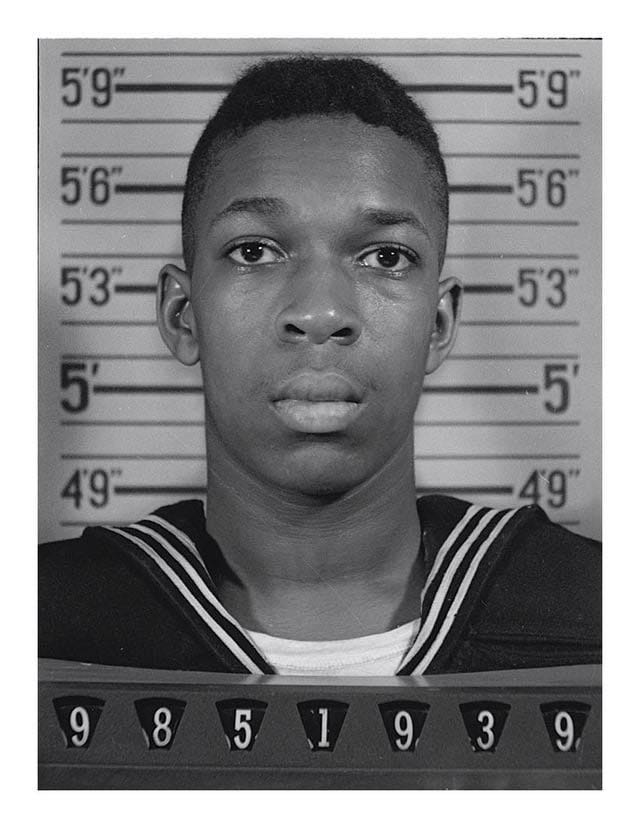
Tomorrow, John Coltrane would have turned one hundred years old. I have been listening to him seriously for nearly sixty years. I was a young man when this music first got into me, and I am not a young man now, but the listening has never stopped. In the past year I wrote a book about Coltrane, about what his life and his music have meant to me across all those decades of paying attention. Writing it did not diminish anything. It deepened everything—each time I sat with a recording I thought I knew, I found it had more to say.
That is what serious engagement with serious art does, if you let it. It keeps finding more of it.
Most things you love for sixty years become familiar. You know where they are going. Coltrane refuses that. After all this time, after all the listening and reading and writing, A Love Supreme still arrives with the weight of something newly discovered. The late recordings still push out past the edge of what I think I understand. My admiration continues to grow—not out of loyalty to a younger version of myself who fell in love with the music, but out of the ongoing evidence that this was one of the greatest artists who ever lived.
Coltrane died in July 1967, forty years old, at the peak of his powers and in the middle of a musical investigation that had no clear endpoint. He had been playing seriously for barely two decades. He left behind somewhere between two hundred and three hundred recordings, a saxophone technique that no one before him had imagined and no one since has fully equaled, and a set of questions about what music can do and what a human life is for.
He grew up in a household shaped by the church. His grandfather was a minister. The preacher’s cadence lived in his phrasing whether he was playing a standard or deconstructing the entire idea of what a standard was supposed to be. That spiritual seriousness—the sense that music was a way to speak to something larger than yourself—never left him. He practiced until his lips bled. He studied music from India and Africa and Japan because he genuinely believed there was something in those traditions that could help him get closer to what he was looking for. He got off drugs because he had a vision and the vision told him his body was not his own to waste. He played free jazz at the end of his life not because the market wanted it but because the search required it, even when it cost him audience members who had loved the classic quartet and couldn’t follow where he was going.
Every recording exists in a state of forward motion. You never catch him coasting. You never catch him repeating himself for the pleasure of a crowd. The first thing this teaches you is the importance of dying with the work unfinished. There is no comfortable late period to settle into, no greatest hits tour, no mellowing. There is no version of Coltrane you can point to and say, “That’s the real one. That’s the peak.” The Coltrane of 1960 is not the Coltrane of 1964, who is not the Coltrane of 1966. Each recording is a report from the frontier.
What holds everything together is something that cannot be taught or manufactured: he was completely himself. There was no gap between the man and the music, no performance of sincerity. You cannot fake that. You cannot perform authenticity. Either the gap exists or it does not.
That is why people in South Africa under apartheid listened to Coltrane. They were not hearing a political statement—though Alabama, his response to the 1963 Birmingham church bombing, is as devastating a piece of political art as the twentieth century produced. They were hearing a human being reaching toward truth with everything he had. That kind of reaching speaks to anyone who is also refusing to accept things as they are.
After sixty years, I understand that this is why Coltrane has mattered to so many people across so many different contexts and struggles. It was not the message. It was the quality of his search. The refusal to accept any answer as final. The obvious commitment to something beyond himself. Every solo was a question. Every session was an attempt to get closer to something true.
One hundred years. He only got forty of them. It wasn’t enough, and it was also somehow everything.
What Coltrane demonstrates across those forty years and the recordings he left behind is what it looks like when a person decides to commit themselves completely to something real. Not to fame. Not to success. To the work itself. To the question. To the reaching.
I think about the young musicians who still spend years trying to understand what he was doing in 1960, in 1964, in 1966. They are not trying to copy it. They are trying to find out what kind of person you have to become to make something that true. That is the real legacy. Not the technique, though the technique is extraordinary. Not the spirituality, though that was genuine. But the demonstration of what it looks like when someone decides that their work is more important than comfort, that the search is more important than arrival, that becoming yourself completely is worth everything you have to pay for it.
That is why people still put the needle down. Not out of nostalgia. Out of ongoing recognition: this was a man who got all the way down to something true and brought it back in a form you can actually receive. And he did it by refusing to be anything other than completely, uncompromisingly himself.
That is the impact that matters. That is what one man can do.
Here is the classic Quartet with Trane, McCoy Tyner, Jimmy Garrison and Elvin Jones, in a 1965 performance.
Next Tuesday: How Mexico Changed My Nervous System
After years of living braced against America’s constant friction, moving to Guanajuato taught me the difference between a slower life and a more human rhythm. In Mexico’s everyday intimacy—shared food, public grief, remembered names, and unremarkable acts of care—I found a culture where people still behave as if they belong to one another. It reminded me that life is not something to manage from a distance, but something to inhabit through tenderness, presence, and repetition.
I’ve listened to Coltrane as long as you have. Live at the Village Vanguard Again came with my first DownBeat subscription at age 16. I heard Coltrane live at the DownBeat jazz fest in Soldier Field — the music flew over my head, but I knew it was profound. I especially love the music he made with Dolphy and the quartet climaxing in Meditations, and his later recordings, especially including Interstellar Space the final “My Favorite Things” from the Olatunji Center. Everything you’ve written about him here seems to me to be true. Thanks Bret.